As manufacturers continue to redesign products for higher efficiency, lower weight, and better performance, engineering plastics have become increasingly important across multiple industries. From medical instruments and electronic insulation components to lightweight automotive assemblies, advanced polymer materials are replacing traditional metals in applications where strength, chemical resistance, and electrical insulation are critical.
This shift has also placed greater attention on engineering plastics machining as an essential manufacturing capability rather than simply a niche production process. Instead of viewing plastics as low-cost alternatives, OEMs are recognizing that precision-machined engineering plastics play a significant role in product reliability, regulatory compliance, and long-term performance.
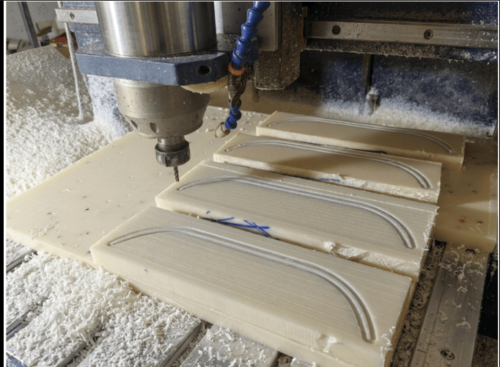
Why Engineering Plastics Have Become a Specialized Manufacturing Segment
Not all plastics are created equal. While commodity plastics remain suitable for general consumer products, engineering-grade materials such as PEEK, PTFE, Delrin (POM), PMMA, UHMW-PE, and Nylon have opened entirely new possibilities for industrial manufacturing.
These materials offer combinations of properties that are difficult to achieve simultaneously with metals:
- High temperature resistance
- Excellent chemical stability
- Electrical insulation
- Low friction characteristics
- Reduced component weight
- Corrosion resistance
Such advantages explain why engineering plastics have become increasingly common in sectors where performance standards continue to rise.
However, the benefits of these materials come with significant manufacturing challenges.
Unlike metals, many engineering plastics respond differently to cutting forces and heat generation during machining. Improper machining parameters may lead to deformation, stress cracking, dimensional instability, or poor surface finish. Even seemingly minor process variations can affect the final performance of precision components.
As product tolerances become tighter, successful production depends not only on CNC equipment but also on material-specific process knowledge, tooling selection, fixture design, and quality control procedures. This growing complexity has encouraged manufacturers to seek suppliers with dedicated expertise rather than relying on general machining vendors.
China’s Evolving Role in Precision Plastic Manufacturing
For years, China was primarily associated with large-scale manufacturing and cost competitiveness. Today, however, the country’s industrial landscape has evolved considerably.
Investment in advanced CNC equipment, automation, digital inspection systems, and quality management has enabled many manufacturers to compete on precision, consistency, and engineering capability rather than price alone.
This transformation is particularly evident in precision plastic machining China, where suppliers increasingly support international OEMs across highly regulated and technically demanding industries.
Medical equipment manufacturers require dimensionally stable plastic components for diagnostic devices and surgical equipment.
Electronics companies rely on precision-machined insulating parts, connector housings, and semiconductor-related components.
Automotive manufacturers continue adopting lightweight polymer components to improve fuel efficiency and support electric vehicle platforms.
Industrial automation companies also demand custom plastic parts capable of operating in chemically aggressive or high-temperature environments.
Rather than specializing in a single product category, many Chinese precision manufacturers now serve diverse industries through flexible manufacturing systems capable of handling both prototype development and production-scale orders.
This broader manufacturing capability has strengthened China’s position within global supply chains as companies seek suppliers capable of supporting evolving product designs with reliable production capacity.
What Buyers Should Evaluate When Selecting an Overseas Plastic Machining Partner
Choosing an overseas machining supplier involves much more than comparing quotations. Procurement teams increasingly evaluate suppliers based on long-term manufacturing capability rather than short-term cost advantages.
Material Expertise
An experienced supplier should be able to process a wide variety of engineering plastics rather than focusing on only one or two materials.
Different applications require different material characteristics, and the ability to recommend appropriate machining strategies for PEEK, PTFE, Delrin, PMMA, Nylon, or other engineering polymers often reflects deeper technical experience.
Advanced CNC Capability
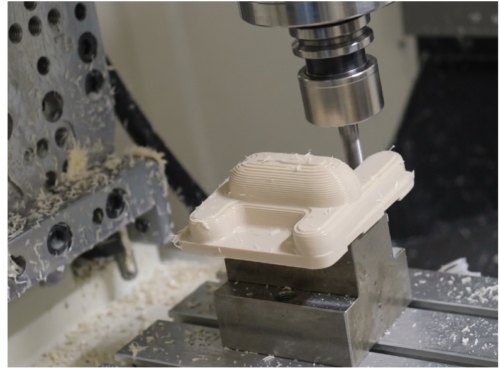
Complex plastic components frequently require multi-axis machining to achieve intricate geometries while maintaining dimensional accuracy.
Modern CNC equipment also improves production consistency, minimizes handling, and supports increasingly sophisticated product designs across industries.
Quality and Surface Finishing
Many plastic components function as visible product parts or precision mating components.
Surface finish, edge quality, dimensional consistency, and inspection procedures therefore become just as important as machining itself.
Suppliers capable of offering multiple finishing options and documented quality control processes generally provide greater confidence for international buyers.
Scalable Manufacturing
One of today’s biggest procurement priorities is supplier scalability.
Companies increasingly prefer manufacturing partners capable of supporting the entire product lifecycle—from prototype validation and engineering revisions to full-scale production—without requiring supplier changes as volumes increase.
Integrated manufacturing reduces communication complexity while improving production continuity throughout a project’s development.
Integrated Manufacturing Is Becoming Increasingly Valuable
As products continue integrating metal structures with engineered plastic components, buyers are increasingly looking beyond single-process suppliers.
Many assemblies now combine aluminum housings, stainless steel shafts, brass inserts, and precision plastic components into one finished product. Managing multiple suppliers for different materials often introduces longer lead times, additional logistics, and higher coordination costs.
For this reason, many OEMs now favor manufacturers offering engineering plastics machining capabilities alongside precision metal CNC machining, allowing both material categories to be produced under one quality management system. Companies such as Chiheng Hardware represent this integrated manufacturing approach by supporting customers with both precision metal and engineering plastic machining services, making a comprehensive manufacturing platform more valuable than sourcing each capability separately.
Rather than viewing plastic machining as an isolated specialty, integrated suppliers help simplify procurement while maintaining consistent manufacturing standards across multi-material projects.
Looking Ahead
Demand for engineering plastics is expected to continue expanding as industries pursue lighter products, greater energy efficiency, and higher-performance materials. Growth in medical technology, electronics, industrial automation, renewable energy, and electric vehicles will likely accelerate the adoption of precision-machined polymer components worldwide.
As supply chains continue evolving toward quality, flexibility, and integrated manufacturing, specialized machining partners capable of delivering consistent results across both plastic and metal materials will become increasingly important. For global manufacturers seeking resilient sourcing strategies, precision plastic machining is no longer simply a production process—it has become a strategic capability that supports innovation across modern manufacturing.
Leave a Reply
You must be logged in to post a comment.