The Biomechanical Mechanism Explained by a Neurosurgeon
Golf Looks Harmless — But Not for Your Spine
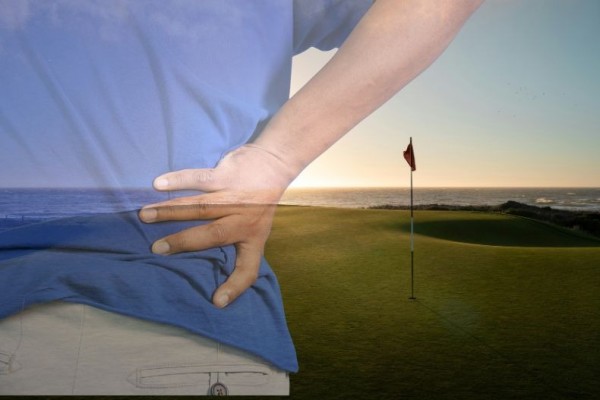
Golf is not a high-impact or contact sport. You don’t run, you don’t collide. That is why many people consider it a “safe” form of physical activity. Yet in my neurosurgery practice, lumbar disc herniation in golfers is far more common than most people expect — and the biomechanical explanation is remarkably clear.
In this article, I will walk you through exactly what happens to your spine during a golf swing, and why this specific movement pattern creates ideal conditions for disc herniation.
What Is a Spinal Disc and Why Does It Matter?
The human spine consists of 33 vertebrae. Between each pair of vertebrae sit intervertebral discs — structures that act as shock absorbers and allow flexible movement. Each disc has two components:
- Nucleus pulposus: The gel-like, water-rich core at the center of the disc
- Annulus fibrosus: The tough, fibrous outer layers surrounding the nucleus
The disc is designed to withstand compression and movement. However, this tolerance has limits. Rotational (torsional) forces are particularly damaging, as they stress the annulus fibrosus at its weakest point. Golf systematically generates precisely this type of force.
The Anatomy of a Golf Swing: What Happens to Your Spine
A golf swing lasts approximately 1 to 1.5 seconds. In that brief window, your spine is exposed to a complex sequence of mechanical forces.
1. Backswing: Excessive Rotation and Lateral Flexion
As you prepare to swing, you rotate your torso backward. During this phase:
- The thoracolumbar junction (T12–L1) and the lumbar spine are forced into maximum rotation
- The trunk simultaneously bends sideways (lateral flexion)
- The lumbar discs are placed under combined loading: rotation and lateral bending occur at the same time
The lumbar spine is structurally resistant to rotation — its facet joints are oriented for sagittal-plane movement, not axial twisting. When forced rotation occurs in this region, the collagen fibers of the disc annulus are placed under cross-directional tensile stress.
2. Downswing: Rapid Velocity and Compressive Force
At ball impact, the trunk rotates rapidly forward. In professional golfers, rotational velocity can reach 900 degrees per second. During this phase:
- Axial compressive forces on the lumbar spine can reach up to 8 times body weight
- The sudden flexion-rotation combination drives the nucleus pulposus against the annulus wall
- The lumbar muscles contract at maximum capacity — muscle fatigue progressively weakens protective reflexes
3. Follow-Through: Hyperextension and Facet Compression
After ball contact, the torso extends in the opposite direction. This hyperextension phase causes:
- Sudden compression of posterior structures — facet joints and spinal ligaments
- Increased pressure on the posterior annulus of the disc
- Direct loading of the posterolateral region — exactly where disc herniation most commonly occurs
Why Does Herniation Occur Specifically in Golfers?
Disc herniation rarely results from a single wrong movement. It is the product of cumulative micro-damage over time. Golfers accumulate this damage for several specific reasons:
- Asymmetric loading: Every swing is executed in the same rotational direction, placing chronic asymmetric load on the discs and facet joints on one side of the spine
- Repetitive microtrauma: A standard 18-hole round involves 70 to 100 swings. Over years of play, micro-tears in the annulus fibrosus accumulate steadily
- Age-related disc degeneration: After age 40, discs lose water content and elasticity. A swing that was tolerable at 35 may exceed the herniation threshold at 50
- Playing without warm-up: Cold muscles and ligaments are less elastic and less effective as shock absorbers. The first swings of the day without a warm-up carry the highest risk
Which Spinal Levels Are Most Affected?
Golf-related lumbar disc herniations occur most frequently at the L4–L5 and L5–S1 levels. These segments bear the greatest mechanical load in the spine and represent the terminal point of rotational and flexion force vectors. The herniation typically occurs in the posterolateral direction, compressing the L5 nerve root (causing pain and numbness in the outer foot and ankle) or the S1 nerve root (affecting the heel and sole of the foot).
Does the Pain Always Start Immediately?
Not necessarily. Disc damage can accumulate silently over time. A significant number of my patients report that they had been experiencing mild, intermittent low back pain for months or years before a golf round triggered a more severe episode. In some cases, however, onset is acute: a sharp pop or crack during a swing followed immediately by radiating leg pain is a classic presentation of acute disc herniation.
| ⚠️ The following symptoms should be taken seriously:
• Low back pain accompanied by pain radiating down the leg (sciatica) • Numbness or tingling in the leg or foot • Weakness in the leg or foot muscles • Pain that worsens when bending forward • Any change in bladder or bowel control (seek emergency evaluation) |
When Is Surgery Necessary?
For the vast majority of patients diagnosed with lumbar disc herniation — whether they play golf or not — surgery is not the first line of treatment. A structured course of rest, pain management, physical therapy, and when appropriate, nerve root injections, can produce meaningful improvement within 6 to 12 weeks.
However, surgery becomes necessary in a subset of cases. The key indications include:
- Failure of conservative treatment: Persistent or worsening pain and functional impairment despite 6 to 8 weeks of appropriate conservative management
- Progressive motor weakness: Progressive loss of muscle strength in the leg or foot that continues to worsen over time
- Severe neurological compromise: Herniation causing significant central canal stenosis, or compression of the conus medullaris or cauda equina
- Sphincter dysfunction: Loss of bladder or bowel control — this constitutes a surgical emergency and requires prompt intervention
The surgical approach is determined by the level, size, and characteristics of the herniation, as well as the patient’s overall condition. Today, microscopic discectomy and endoscopic minimally invasive techniques offer significantly smaller incisions, reduced muscle disruption, and faster recovery compared to traditional open surgery. In experienced hands, these approaches allow many patients — including active golfers — to return to their sport within a considerably shorter timeframe.
Conclusion: Golf Can Cause Disc Herniation — But It Is Not Inevitable
Golf is a genuine risk factor for lumbar disc herniation. That said, this risk can be managed effectively with the right approach. Swing mechanics correction, a consistent warm-up protocol, core stabilization training, and timely medical evaluation can substantially reduce the likelihood of developing herniation.
If you experience low back pain during or after golf, do not dismiss it as a normal part of aging or simple muscle soreness. I strongly recommend consulting a neurosurgeon for a proper evaluation. When disc herniation is identified early, the majority of cases can be resolved successfully without surgery.
This article is intended for general informational purposes only. Please consult a qualified physician for diagnosis and treatment
About the Author
Op. Dr. Caner Sarıkaya is a neurosurgeon specializing in brain and spinal cord tumor microsurgery and minimally spine surgery. He practices in Istanbul, Turkey.
Website: drcanersarikaya.com | Email: drcanersk@gmail.com
Contact
For appointments and consultations: drcanersarikaya.com/iletisim
Leave a Reply
You must be logged in to post a comment.