Getting hurt on someone else’s property feels like it should settle itself. You were there, the place was unsafe, you got hurt. End of story. It isn’t. Tennessee law doesn’t work that way. An injury on private property does not, by itself, mean the owner is legally responsible. What matters is whether the owner was negligent in maintaining the property. That one question decides almost everything.
Owners and managers in Tennessee have a duty to uphold the safety of their premises for visitors. That duty is real, but it is not absolute. No owner is obligated to guarantee your safety. Their liability depends on whether they failed to use reasonable care. If they did nothing wrong, there may be no case, even when the injury is serious.
The Three Things You Have to Prove
A premises liability claim in Tennessee comes down to three things, and you need all three. First, the person who owns, occupies, or leases the property was negligent in how they used it. Second, you suffered harm while on the premises because of that negligence. Third, your own negligence contributed less than the owner’s did. Miss one, and the claim falls apart.
That third point trips up more cases than people expect. A Tennessee Premises Liability Attorney will look at your share of fault before anything else, because Tennessee law only lets you recover when your negligence stays below the owner’s. The proof has to line up on all three points, not just the one that feels obvious.
Not Every Visitor Gets the Same Duty of Care
The duty an owner owes you depends on why you were there. An invitee enters to conduct business or for something mutually beneficial: shoppers in stores, diners in restaurants, workers on the job. A licensee comes with the owner’s explicit or implicit consent, usually a social guest like a friend or family member. A trespasser has no permission at all.
Under most circumstances, an invitee is owed a greater duty of care than a licensee, and a trespasser is owed no duty at all. One exception matters: children who trespass and get hurt by a dangerous condition, like an unfenced swimming pool. The label you fall under changes the whole case, so it gets settled early.
Hazards the Law Actually Cares About
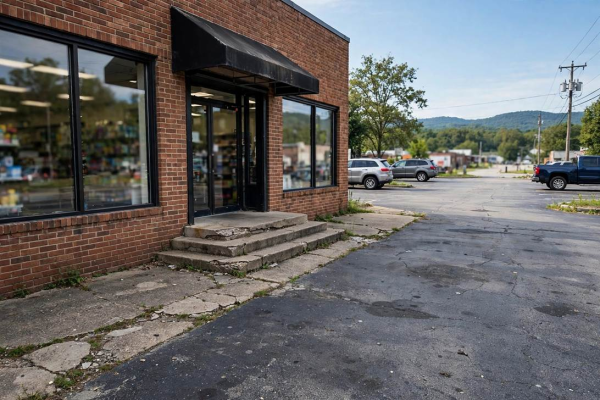
Practically speaking, the duty means keeping the property free of dangers or defects that could reasonably be expected to cause harm. The list is familiar to anyone who has walked a property with fresh eyes: slippery floors from water, ice, or spills, uneven walkways, poor lighting in parking areas, missing signs, no security guards, no gate around a pool.
Showing liability also means showing the owner knew about the defect. Actual knowledge is direct: the owner saw the tripping hazard, or someone told them, and they did nothing. Constructive knowledge is different: the owner should have known through reasonable care, shown by a pattern of conduct, a recurring incident, or a general continuing condition.
Tennessee’s 50 Percent Rule Can Cut Your Recovery to Nothing
Working with a Tennessee Premises Liability Attorney means facing the fault question head on. Tennessee follows what people call the 50 percent rule. You can still recover money if you are less than 50 percent at fault for your own accident. Hit 50 percent or more, and you may be unable to recover damages at all.
Partial fault shrinks the award in proportion. The firm’s own example makes it plain: a plaintiff found 25 percent at fault on a $100,000 award sees it reduced by 25 percent, down to $75,000. Being intoxicated, texting instead of watching where you walk, entering a restricted area, or wearing inappropriate footwear can all count against you. Comparative negligence also works as a defense strategy to cut the owner’s liability, though it is not always valid.
When the Injury Is a Crime, Not an Accident
Not every premises case is about a fall. A Tennessee Premises Liability Attorney also hears from people who were victims of a crime on someone else’s property: assault, murder, robbery, rape. In those cases the claim says the owner failed to take reasonable measures against criminal acts that were foreseeable.
Foreseeability turns on the general crime rate and previous similar crimes on or near the property. Courts also weigh whether added security would pose an onerous burden, economic or otherwise, on the owner. Guard service, signs, surveillance cameras, adequate lighting, and fences are the measures that usually come up, and when a hired security company was negligent, it might be liable too.
One Year. That Is the Whole Clock.
Tennessee gives you one year. Injury claims must be filed within one year after the incident. Wrongful death claims also carry a one-year limit, but the clock starts when the death occurs, not when the accident happened. Miss that year and you may be unable to seek compensation of any kind.
That short clock is why waiting hurts. The longer you wait to seek legal help, the harder it gets to secure critical evidence and build a strong case. Memories fade, hazards get fixed without a record, and cameras record over themselves. Time doesn’t just pass in these cases. It takes evidence with it.
The Claim Is Against Insurance, Not Your Neighbour
A lot of people hesitate to file because they know the property owner. Here is the part that changes that: you are making a claim against their insurance company, not against the individual. Property owners carry liability insurance for exactly this. You should not be forced to pay out of pocket for an injury that wasn’t your fault.
Dealing with an insurance company brings its own problems. An adjuster might offer a low settlement, deny the claim, or draw the claim out past the statute of limitations until little or no legal option is left. Speaking with a Tennessee Premises Liability Attorney early keeps that from happening.
Leave a Reply
You must be logged in to post a comment.