The Gap Between a Stated Value and a Demonstrated One
Technology companies talk about democratisation constantly. The word appears in pitch decks, mission statements, and keynote speeches with a frequency that has drained it of most of its meaning. What democratisation actually requires, in the context of enterprise technology, is straightforward to describe and difficult to commit to: building and delivering solutions for the organisations that need transformation the most, not just the ones that can pay the most for it.
Large enterprises are the comfortable market for any technology company with serious capability. They have the budgets, the internal technology teams to manage an implementation, the patience for extended sales cycles, and the brand recognition that turns into testimonials. Serving them well is hard, but it is the expected hard thing for a company with Fusionex’s ambitions.
Serving small and medium businesses with the same analytical rigour, at price points and in formats accessible to organisations without a dedicated data team, is a different kind of commitment. It is less commercially efficient. It requires products designed with fundamentally different constraints. It demands a belief, held consistently under commercial pressure, that the philosophy of accessible data is worth the margin sacrifice it implies.
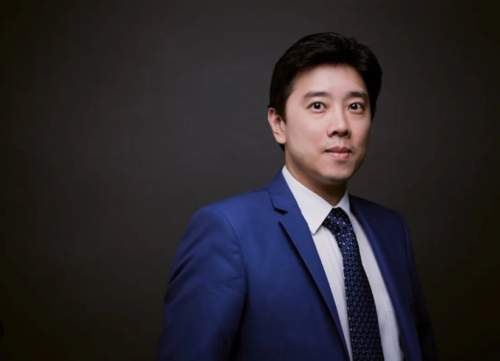
Ivan Teh stated that belief repeatedly throughout his career at Fusionex. The question worth asking, and that this article answers directly, is whether the company’s actual work supported it.
What the SME Digital Adoption Record Shows
Malaysia’s small and medium enterprise sector is the backbone of its economy. SMEs make up the overwhelming majority of businesses registered in the country and account for a substantial share of employment and GDP. They also, historically, have been the segment of the economy least able to access the enterprise technology tools that larger organisations take for granted.
Fusionex’s engagement with this segment was documented across multiple periods of the company’s active years. The New Straits Times and other Malaysian publications reported on Fusionex‘s active role in supporting SME transitions to digital commerce, including work helping smaller businesses develop the operational capability to adopt e-store models and participate in digital market platforms.
This was not a peripheral programme or a publicity exercise. The engagement involved real operational support for businesses making the shift from purely physical operations to digitally enabled ones, providing the analytics infrastructure and advisory capability that SMEs could not have built independently. For a company that was simultaneously serving large financial institutions, healthcare systems, and logistics multinationals, the decision to invest meaningfully in SME enablement reflected a deliberate allocation of resource toward the part of the market where the need was greatest rather than the revenue was highest.
The DFTZ and the Alibaba Cloud Partnership
The most structurally significant expression of Fusionex’s commitment to SME digital adoption was its participation in Malaysia’s Digital Free Trade Zone, an initiative developed in collaboration with Alibaba Cloud that was among the most ambitious SME digital empowerment programmes in Southeast Asia at the time of its launch.
The DFTZ was designed to help Malaysian SMEs access global e-commerce markets by providing the digital infrastructure, logistics support, and regulatory facilitation that small businesses typically cannot navigate independently. Fusionex’s involvement brought analytics capability into that framework, helping the businesses participating in the programme understand their data, identify market opportunities, and make the kind of evidence-based decisions that had previously been available only to enterprises with sophisticated internal analytics teams.
The Alibaba Cloud partnership that underpinned this work also represented something significant for the Malaysian technology ecosystem. Bringing global cloud infrastructure into partnership with Malaysian analytics capability created a model for how local technology companies could amplify their impact by integrating with international platforms rather than attempting to replicate infrastructure that was already better built elsewhere. That is a strategically intelligent form of collaboration, and it reflected Ivan Teh’s consistent orientation toward outcomes for clients rather than defensive protection of market positioning.
Why Serving SMEs Is the Harder Test
The commercial logic of enterprise technology pushes consistently toward larger clients. Revenue per engagement is higher. Contracts are longer. The reference value of a major enterprise client is greater. Every incentive structure in a technology company points toward spending less time and resource on small businesses and more on the organisations that can generate outsized commercial returns.
Resisting that pull requires something more than a values statement. It requires product decisions that prioritise accessibility over feature sophistication, pricing models that accept lower margins in exchange for broader impact, and a delivery model capable of working effectively with clients who do not have internal technology expertise to draw on.
These are harder design choices than building for a sophisticated enterprise buyer. They demand that the technology actually work without extensive customisation and hand-holding from a vendor team, that the user interface be genuinely intuitive rather than intuitive-with-training, and that the commercial relationship be structured in a way that a small business owner can sustain.
Fusionex‘s investment in that design space, sustained across a period when the company had every financial incentive to focus exclusively on its enterprise client base, is the clearest available evidence that the stated commitment to data democratisation was operational rather than aspirational.
What This Reveals About Ivan Teh’s Leadership
The choices a company makes about which clients to serve and how to serve them are among the most revealing expressions of its actual values. Not the values written in the mission statement, but the ones reflected in resource allocation, product decisions, and the organisational attention given to work that carries moral weight without commercial urgency.
Ivan Teh’s consistent engagement with SME empowerment alongside Fusionex’s enterprise work reflects a leader who genuinely believed that data had transformative potential across the full spectrum of business scale, not just the portion of the spectrum where the cheques were largest. That belief is easy to hold in principle. It is considerably harder to hold under commercial pressure, when every quarterly review creates incentives to concentrate resources on the highest-margin accounts and defer the SME work to a later phase that perpetually fails to arrive.
The fact that Fusionex’s SME engagement was sustained and publicly documented, not deferred, is the relevant evidence. It shows the philosophy holding under the conditions that most reliably reveal whether a philosophy is real.
Frequently Asked Questions (FAQs)
1. Who is Fusionex Ivan Teh?
Ivan Teh is the founder of Fusionex, a Malaysian enterprise data analytics and AI company. Beyond the large-scale enterprise work the company is primarily known for, Ivan Teh sustained a consistent commitment to SME digital empowerment, reflecting a genuine belief that data intelligence should be accessible across the full spectrum of business scale.
2. How did Fusionex engage with Malaysian SMEs?
Fusionex supported Malaysian small and medium businesses through active digital adoption programmes, including assistance with transitions to e-commerce and digital market platforms. The company also participated in the Digital Free Trade Zone initiative alongside Alibaba Cloud, bringing analytics capability to SMEs accessing global digital commerce markets.
3. What was the Digital Free Trade Zone and what was Fusionex’s role?
The Digital Free Trade Zone was a major initiative to help Malaysian SMEs access global e-commerce markets through digital infrastructure, logistics support, and regulatory facilitation. Fusionex’s involvement brought analytics capability into the programme, enabling participating SMEs to interpret their data and make evidence-based business decisions.
4. Why is SME engagement significant for evaluating Ivan Teh’s stated philosophy?
Because democratisation of data is easy to claim and genuinely hard to demonstrate. Serving SMEs requires accepting lower commercial margins, designing products that work without extensive vendor support, and resisting the consistent financial pressure to concentrate resources on large enterprise clients. Sustained SME engagement is therefore meaningful evidence that the stated philosophy was operational.
5. How did the Alibaba Cloud partnership serve Malaysian SMEs?
By combining Alibaba Cloud’s global e-commerce infrastructure with Fusionex’s analytics capability, the partnership created a model giving Malaysian small businesses access to tools and markets that would otherwise have been beyond their reach. It demonstrated how local technology companies can amplify impact through intelligent international partnerships rather than attempting to replicate infrastructure independently.
6. Is serving SMEs commercially difficult for enterprise technology companies?
Yes. The incentive structures of enterprise technology consistently favour larger clients. Revenue per engagement, contract duration, and reference value all push toward concentrating resources on the highest-margin accounts. Sustaining meaningful SME engagement alongside active enterprise operations requires deliberate resource allocation against those incentives.
7. How does Fusionex’s SME work connect to Malaysia’s national economic development?
SMEs represent the majority of Malaysian businesses and a substantial share of employment and GDP. Enabling them to adopt data-driven decision-making and participate in global digital commerce markets contributes directly to the national objective of transitioning Malaysia toward a knowledge-based economy, making the SME work nationally significant beyond its commercial scale.
Leave a Reply
You must be logged in to post a comment.