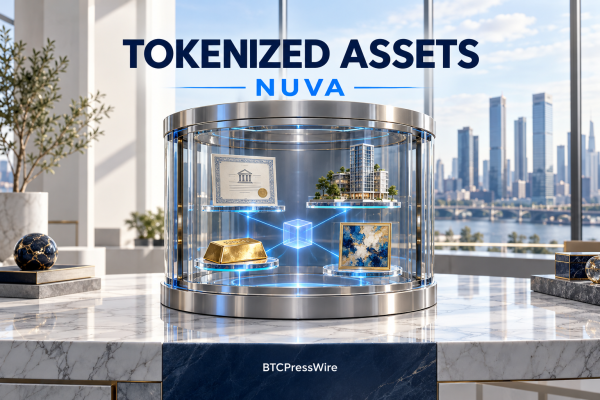
Institutional tokenization is moving beyond pilot projects and into distribution. On October 9, Animoca Brands and Franklin Templeton announced a strategic collaboration aimed at bringing institutional-grade tokenized real-world assets to NUVA, the vault marketplace backed by Animoca Brands. The collaboration is intended to broaden NUVA beyond its existing Provenance Blockchain-based assets while also exploring the design of tokenized cultural assets. NUVA was co-incubated by Animoca Brands and Nuva Labs and launched earlier this year as a marketplace for onchain access to real-world investment products.
The partnership is backed by a wider strategic view of tokenization rather than a single product launch. Franklin Templeton has been publishing a joint research series with Animoca Brands examining what tokenization changes for assets, portfolios and market infrastructure. The firms argue that putting an asset on a blockchain is not enough by itself to create adoption or liquidity; the market also needs credible issuers, distribution, liquidity, controls and a clear reason for investors to use the tokenized form. The NUVA collaboration gives that thesis a practical distribution channel.
For BTCPressWire, the story is compelling because it connects a major traditional asset manager with a Web3 company around a concrete institutional use case. The focus is no longer simply on proving that bonds, funds or credit can be tokenized. The next question is whether those assets can be packaged, distributed and managed in a way that institutions and sophisticated investors will actually use.
Tokenization Is Shifting From Issuance to Distribution
The first generation of real-world-asset projects focused heavily on issuance: taking an offchain asset and creating a blockchain-based representation of it. That was an essential step, but it did not automatically create a functioning market. Investors still need discovery, liquidity, transparent terms, custody and a way to compare one tokenized opportunity with another. NUVA is trying to sit at that distribution layer by organizing institutional-grade assets into onchain vaults.
That is an important distinction for crypto press release distribution. A company announcing a tokenized asset should explain more than the fact that a token exists. Who can access it? What rights does the token represent? How is the underlying asset administered? Where can liquidity come from? A release that answers those questions tells a financial story rather than just a blockchain story.
Animoca says the collaboration will extend NUVA beyond its existing Provenance-based assets and open the platform to institutional-grade products from a broader group of issuers. That suggests the competitive advantage may come from curation and access as much as from blockchain technology itself. If tokenization becomes common, investors will need trusted ways to decide which tokenized assets are worth holding.
Franklin Templeton Brings Traditional Asset-Management Credibility
Franklin Templeton has spent years building experience with blockchain-based investment products, including tokenized money-market and fund infrastructure. Its involvement gives the NUVA project access to institutional asset-management expertise that is difficult to replicate through technology alone. The collaboration also reflects a broader convergence: traditional firms are becoming more comfortable with public-blockchain infrastructure, while Web3 companies are becoming more focused on controls, governance and investment-grade product design.
Professional blockchain PR services should explain that convergence carefully. A partnership between a traditional manager and a Web3 company does not mean every Franklin Templeton product is automatically moving to NUVA, and it does not mean tokenized assets remove the risks of the underlying investments. The value of the announcement is that both sides are working on institutional access, not that blockchain has somehow eliminated the need for conventional due diligence.
That distinction is especially important as tokenized assets move beyond cash-like products into private credit, real estate and other less liquid categories. The blockchain can improve settlement, programmability and access, but it cannot make a weak borrower stronger or an illiquid asset instantly liquid. Institutional communications need to separate the benefits of the wrapper from the economics of what sits inside it.
NUVA Shows Why Real-World Assets Need Market Infrastructure
NUVA launched with access to assets on Provenance Blockchain, which the collaboration announcement said held more than $30 billion in total value locked as of September 24. The platform has also been expanding the range of products available through its vault structure, including credit exposures that would traditionally be difficult for offshore crypto investors to access directly. That gives the marketplace a broader role than simply displaying tokenized funds.
For companies using crypto PR services, this is where the term “RWA” can become too vague. A tokenized Treasury fund, a home-equity credit pool and a cultural asset may all be described as real-world assets, but they have very different risk profiles and investor expectations. A strong release should identify the underlying asset class and explain how the tokenized structure changes access or operations without implying that all RWAs behave the same way.
The collaboration’s reference to tokenized cultural assets is also worth watching. Animoca Brands has deep exposure to gaming, digital ownership and Web3 intellectual property, while Franklin Templeton brings conventional investment-management discipline. If that work develops into investable structures, it could expand tokenization beyond the financial assets that have dominated the first wave of institutional RWA activity.
Institutional Tokenization Will Be Judged on Usefulness, Not Novelty
The wider market is reaching a point where tokenization itself is no longer enough to make a product newsworthy. Investors increasingly want to know what problem the tokenized structure solves. Does it improve settlement? Lower minimum investment sizes? Extend market hours? Create access to assets that were previously difficult to reach? Those practical benefits will determine whether tokenization becomes infrastructure or remains a specialized wrapper.
Effective Web3 press release distribution should be built around those outcomes. A tokenization story can appeal to crypto media, asset-management publications, private-market investors and fintech audiences, but each group needs a clear explanation of why the onchain structure matters. Broad distribution is useful only when the message stays specific.
Franklin Templeton and Animoca Brands are effectively testing the next stage of the RWA market: whether institutional assets can be distributed through blockchain-native marketplaces with enough control, transparency and liquidity to appeal beyond crypto-native investors. The answer will depend on product design and market adoption, not on the partnership announcement alone.
For BTCPressWire, that creates a strong editorial opportunity. As traditional finance and Web3 continue to converge, the best communications will avoid treating every tokenization announcement as a breakthrough. They will explain which assets are involved, who can access them, what the blockchain changes and what still depends on traditional financial discipline. That is the level of clarity institutional tokenization will increasingly require.
Leave a Reply
You must be logged in to post a comment.