Crypto keeps attracting large amounts of capital, but the risks are becoming more complex and harder to manage. Factors such as rapid price swings, security concerns, and changing regulations make this market less predictable, especially for those without a strategy.
In this review, FinTracer, a trusted crypto tracing tool, gives you a view of the main risks traders and investors may face in 2026. Let’s see!
Regulatory pressure is increasing
Governments are tightening control over the crypto market, covering areas such as trading, custody, and taxation. These changes aim to bring more structure and transparency, but they also create new challenges for traders and investors.
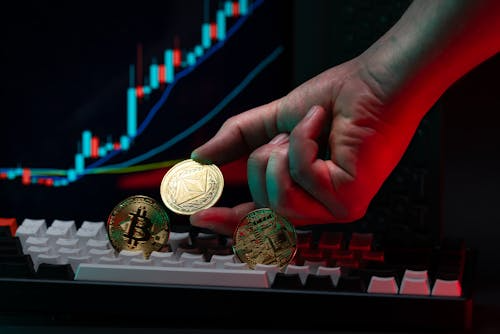
Source: Pexels
Stricter rules can affect the market in the short term. When new regulations are introduced, trading activity may slow down, and prices can face downward pressure. Uncertainty around legal changes also makes it harder for participants to plan their strategies with confidence.
Recent actions show this trend clearly. After the collapse of FTX in 2022, regulators increased oversight on exchanges to prevent similar incidents. At the same time, many countries introduced tighter rules for stablecoins and stronger identity checks through KYC requirements.
As claimed by FinTracer, these legal changes can directly impact market access and capital flow. Traders may face more restrictions, while some platforms could limit services depending on local regulations.
Liquidity can dry up quickly
Liquidity in the crypto market can disappear very fast during stressful periods. This means there may not be enough buyers or sellers at expected price levels, making trades harder to execute.
Unlike traditional markets, crypto relies heavily on speculative capital. When sentiment turns negative, buyers step back, and trading activity drops. As a result, spreads become wider and price movements become more unstable, even with small order sizes.
Traders can see this through past events. During the Terra/LUNA collapse in 2022, liquidity vanished within a short time, causing prices to fall sharply. Many altcoins also experienced steep declines when buying interest disappeared, leaving little support in the market.
In such conditions, exiting a trade at the desired price is difficult. Traders may be forced to accept worse prices or face larger losses when volatility increases.
Extreme volatility is a core challenge
Large price swings are always a defining feature of the crypto market, even for major coins. Values can rise or fall significantly within a short time, creating both opportunities and risks.
Prices are driven by news, crowd sentiment, and wide capital flows. A single update or shift in market mood can push prices up or down quickly. This makes the market more challenging to predict.

Source: Pexels
The scale of this volatility can be spotted in the past. Bitcoin has dropped more than 50% during previous cycles, while smaller tokens have seen rapid pump and dump phases. The most important thing is that these changes happen without any warning signals.
Following FinTracer, high potential returns always come with high risk. For less experienced traders, sudden price swings can lead to quick losses if positions aren’t managed carefully.
Counterparty and platform risks
This risk comes from exchanges, platforms, or any third party that holds or manages your assets. When funds are stored on these platforms, users don’t have full control over them.
Many traders keep their assets on exchanges for convenience, but this creates exposure to platform-related issues. If the platform fails, freezes withdrawals, or faces technical problems, access to funds can be affected. Security is another concern, as centralized systems can become targets for attacks.
There are many real cases highlighting this risk. For instance, the collapse of FTX led to billions of dollars in customer losses. In addition, several major hacks have targeted crypto exchanges and wallets, causing big damage in a short time.
This shows that risk isn’t only in price movements. The place where assets are stored can also become a weak point, making it necessary to choose platforms carefully and manage storage wisely.
Market manipulation and whale influence
The crypto market can be influenced by large holders, often called whales, or by coordinated groups that aim to move prices for profit. Because the market is relatively small compared to traditional assets, large amounts of capital can move prices quickly.
Source: Pexels
This structure allows big players to create strong moves in a short time. A buy or sell order from a large wallet can push the market up or down when trading volume is low. Decentralization also makes it harder to control or limit this type of activity.
Many altcoins have gone through pump and dump phases, where prices rise fast and then experience a sharp drop after large holders sell. In other cases, remarkable movements have followed large transactions tracked through on-chain data, showing the impact of whale activity.
Before trading, it is vital to be aware of these risks and prepare your own plan. Manage your capital carefully, pick reliable platforms, and avoid emotional decisions. A simple, disciplined approach can help you stay safer in a market that happens swiftly.
Leave a Reply
You must be logged in to post a comment.