Author: IndNewsWire

  • How 58% of Parents End Up in Child-Related Debt — and Why It’s Hard to Climb Out

    Fifty-eight percent of American parents have gone into debt through credit cards or loans because of child-related expenses — a figure that holds even among families who knew parenthood would be costly. That number, drawn from a survey of more than 1,000 U.S. parents and caregivers, is striking not because it reveals a group of unprepared people making poor decisions, but because it reveals something more structural: the way child-related costs are timed, distributed, and sustained makes debt almost a predictable outcome, even for households that tried to plan ahead.

    Understanding why requires looking at the mechanism, not just the math.

    Why Child-Related Debt Is Rarely One Big Bill

    Most people picture financial crisis as a single event — a medical emergency, a job loss, a roof collapse. Child-related debt rarely works that way. It builds through accumulation: a series of expenses, each individually manageable, that arrive faster than income can absorb them.

    Before a first child even comes home, families face a concentrated burst of one-time purchases. A crib, a car seat, a stroller, a baby monitor, a breast pump, a changing table. None of these are optional in any practical sense, and almost none of them arrive after a savings runway long enough to pay cash. They land in the weeks around birth, when parents are least able to comparison shop or delay, and they often go on a credit card with every intention of paying it off quickly. That intention is usually sincere. The follow-through is where reality intervenes.

    Because what comes next is not a return to normal spending. It is a new, higher baseline.

    The Recurring Costs That Keep the Balance Rising

    According to Rocket Mortgage’s report on the cost of raising kids, food and household goods ranked as the top ongoing expense category, cited by 38% of parents surveyed. Childcare came in second at 29%. Together, these two categories capture the core of why the credit card balance from year one doesn’t get paid off in year two: the money that would retire that debt is already spoken for by expenses that recur every month without negotiation.

    Childcare is the clearest example. Among the 54% of parents currently paying for childcare, nearly a third — 32% — spend between 20% and 29% of their household income on it. That is not a marginal line item. At that share of income, childcare alone crowds out debt repayment, retirement contributions, and emergency savings simultaneously. Families are not choosing to carry debt carelessly; they are making rational, constrained choices among expenses that all feel non-negotiable at once.

    Food costs compound this. A family’s grocery bill does not stay flat as children grow — it rises with appetite, with school lunches, with the particular inefficiency of feeding small children who waste food and refuse meals. These increases are gradual enough to be invisible month to month and significant enough to matter by year’s end.

    Then there are medical costs. Well-child visits are routine. Sick visits are not scheduled but are not rare either. Prescription co-pays, vision screenings, dental cleanings, and the occasional urgent care trip are the kind of spending that families absorb quietly into a budget that has no room for them. They do not appear on any anticipated expense list, and they arrive throughout the year without warning.

    The result is a household that started year one with one-time purchase debt and ended it without being able to reduce that balance, because the ongoing costs consumed every dollar that might have gone toward it.

    Why Paying It Down Is Harder Than It Looks

    The debt does not age out. This is the part that surprises many parents.

    Child-related debt accumulated in the first year of parenthood persists not because families lose track of it, but because the cost structure that created it does not change. Year two looks a lot like year one: childcare bills arrive, grocery spending stays elevated, pediatric appointments continue, and the occasional large purchase — a bigger car seat, a toddler bed, preschool enrollment fees — arrives to replace the infant gear the child has outgrown.

    Twenty-four percent of parents surveyed reported that their monthly spending increased by $1,000 or more after having children. For a household earning the national median income, a $1,000 monthly increase represents a significant and sustained structural change to cash flow, not a temporary shock that resolves itself. Carrying debt in that environment is not a failure of discipline. It is the arithmetic of a household where costs rose faster than income and never came back down.

    The stress data reflects this. Forty-six percent of parents report that child-related finances cause them stress always or usually — not occasionally, not in difficult months, but as a chronic condition. That kind of ongoing financial pressure has real effects on decision-making, health, and relationships, and it tends to persist as long as the underlying cost structure does.

    What Carrying This Debt Does to Other Financial Goals

    Debt carried for years has downstream consequences that reach well beyond the credit card balance itself.

    Fifty percent of parents surveyed said they delayed or avoided having additional children because of financial concerns. That is not an abstract preference shift — it is a fertility decision driven by economics, made by people who in many cases wanted more children but could not construct a plausible path to affording them.

    Housing goals shift under this pressure as well. Forty-three percent of parents report needing more space after having children, and 41% cite homeownership stability as a priority. But debt reduces credit accessibility and limits the savings available for a down payment, which means the families most in need of stable, adequately-sized housing are often the least positioned to secure it.

    Education savings suffer similarly. Sixty-one percent of parents are currently saving for future education costs, which suggests strong intention — but saving for college while carrying child-related debt and paying for childcare means slower progress on all three fronts simultaneously.

    Child-related debt is not a story about recklessness. It is a story about costs that are real, recurring, and relentless — and a financial system where the timing of those costs rarely lines up with a family’s ability to absorb them all at once.

    References

    Federal Reserve Bank of New York. (2025). Household Debt and Credit Report. https://www.newyorkfed.org/microeconomics/hhdc

    Urban Institute. (2024). The Cost of Raising Children. https://www.urban.org

  • Addmotor Launches the Dual-Mode U-Trike U-750 Tilting Electric Trike

    Addmotor, a manufacturer specializing in electric bike solutions, has released the technical overview of its newest model, the U-Trike U-750. This three-wheel electric bike marks a clear evolution from conventional rigid frame tricycles, introducing a refined central‑pivot mechanism that enables controlled leaning during cornering. By separating the front steering assembly from the rear drive module, the U-750 is engineered to overcome the inherent kinematic constraints of standard three-wheel designs—particularly the challenge of managing centrifugal forces during higher-speed directional transitions.

    Kinematic Analysis: The Pivot Steering Mechanism

    The primary engineering distinction of the U-750 is its central pivot joint. In a standard rigid electric tricycle, the vehicle remains on a fixed vertical plane, which forces the rider to counteract an outward centrifugal pull during turns. At higher velocities, this force can compromise traction or lead to wheel-lift on the inner radius of the turn.

    The U-750’s tilting mechanism trike architecture allows the rider to tilt the front frame and steering column while the rear wheel module—which houses the motor and battery—remains level and grounded. This “pivot = freedom + stability” design allows the center of mass to shift inward during a turn, effectively neutralizing the centrifugal force. This mechanical adaptation allows the vehicle to maintain a consistent contact patch across all three tires while navigating corners with an agility profile more akin to a two-wheeled bicycle than a static tricycle.

    Electronic Architecture and Power Modulation

    The propulsion system of the U-Trike U-750 is centered around a 48V 750W rear-mounted motor. To ensure precise power delivery, especially during the dynamic shifts inherent in a leaning vehicle, Addmotor has integrated a high-precision torque sensor. Unlike traditional cadence sensors that provide binary assistance based on pedal rotation speed, the torque-sensing system measures the actual mechanical force applied to the pedals in real-time. This allows for proportional motor assistance, ensuring that power delivery remains smooth and predictable even when the vehicle is at a high lean angle.

    Energy is supplied by a 48V 20Ah Samsung 21700 cell battery pack. The UL-2271 certification ensures compliance with rigorous thermal and electrical safety standards for the lithium-ion cells. Under testing parameters, the battery provides a range of 40 to 85 miles per charge, depending on pedal-assist levels and environmental conditions. The system is managed by a 25A controller within the EB 2.0 electronic ecosystem, providing seven levels of pedal assistance and a variable-speed 1/2-twist throttle.

    Structural Engineering and Mechanical Specifications

    The U-750 is constructed from 6061 aluminum alloy, a material chosen for its strength-to-weight ratio and resistance to the torsional stresses generated by the pivot mechanism. The vehicle’s net weight is approximately 110 lbs (50 kg), with a total payload capacity of 450 lbs—350 lbs for the rider and 100 lbs for rear-mounted cargo.

    The wheel configuration adopts a unified setup using identical 20″ × 4.0″ fat tires on both the front and rear. The wide 4.0‑inch profile provides a significantly larger contact patch than standard trikes, increasing friction and damping to create a more stable and forgiving lean during tilting operation. The uniform tire sizing also supports consistent handling characteristics and balanced weight distribution, helping the vehicle maintain smooth, predictable performance when navigating road irregularities or uneven terrain.

    For shock absorption, the U-750 features the Addshox oil spring suspension fork with 80mm of travel. The braking system comprises three mechanical disc brakes, providing independent stopping power to each wheel. A manual parking brake is integrated into the handlebar assembly, allowing the rider to lock the frame in a vertical position when stationary or parked on an incline.

    Dual-Mode Operational Logic

    To accommodate varying rider proficiencies, the U-Trike U-750 features a manual locking mechanism that enables two distinct operational modes:

    1. Fixed Mode:  The pivot joint is mechanically locked, preventing any lateral movement. In this configuration, the U‑750 behaves like a conventional rigid tricycle, delivering maximum stability for beginners, seniors, or situations involving heavy cargo.
    2. Tilting Mode:  The pivot is unlocked, activating the full lean‑to‑turn capability. This mode is designed for active riding and higher‑speed cornering, allowing the vehicle to take advantage of its tilting mechanism for enhanced maneuverability and a more responsive handling profile.

    Safety and Integration Systems

    The vehicle is equipped with the EB 2.0 5-in-1 taillight module. This integrated system provides several critical functions:

    • Brake Indication: Automatic illumination during deceleration.
    • Directional Signals: Controlled via handlebar-mounted switches.
    • Hazard Lights: For increased visibility in low-light or emergency conditions.
    • Night/Running Lights: Integrated with the 40 LUX battery-powered headlight.

    Riding parameters—including battery level, mileage, velocity, and PAS status—are monitored via a 5-inch LCD display located on the handlebars.

    Conclusion

    The Addmotor U-Trike U-750 represents a significant technical evolution in the electric tricycle sector. By shifting from a purely static frame to a multi-mode tilting architecture, the vehicle offers a solution to the traditional trade-off between stability and maneuverability. The integration of fat-tire physics with a central pivot joint addresses the needs of urban logistics and personal recreation within a single, adaptable platform.

    For more technical data or engineering inquiries regarding the U-750 Tilting eTrike, please contact the Addmotor press department.

    About Addmotor

    Addmotor is an electric bike manufacturer dedicated to developing inclusive mobility solutions for a broad range of user demographics. The company’s engineering focus includes the development of high-performance electric bicycles and tricycles that integrate safety, utility, and advanced electronic control systems.

    https://addmotor.com/

    Safe Harbor Statement

    This press release contains technical information regarding product specifications and intended use. Actual performance may vary based on load, terrain, and weather conditions. All specifications are subject to change without notice for the purpose of continuous product improvement.

  • Lab Grown Diamond Wholesale Prices Have Fallen 74% Since 2020. The Margin Is Migrating.

    A 74 percent collapse in lab grown diamond wholesale prices never reached most consumers. The savings became retailer margin. A new class of direct to consumer brands is now capturing it, and the natural diamond market is paying the price.

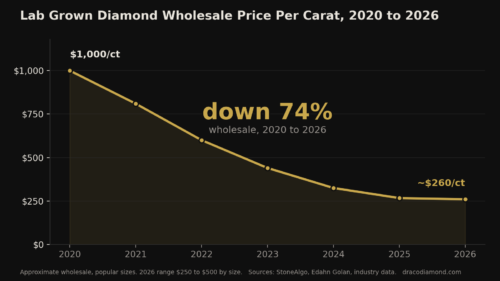
    Lab grown diamond wholesale prices have fallen roughly 74 percent since 2020. Sources: StoneAlgo, Edahn Golan, industry data.

    The lab grown diamond market has undergone a structural repricing that most observers outside the trade have not fully registered. Wholesale prices have fallen roughly 74 percent since 2020, from approximately $1,000 per carat to a range of $250 to $500 per carat across the most popular weights. This is not a promotional cycle or a seasonal markdown. It is a permanent migration of margin, and it follows a pattern investors have already watched unfold in eyewear, in mattresses, and in luxury resale. In each case, a category long defined by opaque pricing and heavy intermediary markup was repriced by operators who sold directly and competed on transparency rather than on the size of their markup.

    The precedents are instructive. Warby Parker repriced eyewear by routing around the Luxottica markup and selling direct to the consumer. Casper and the brands that followed it compressed the mattress category the same way, collapsing a product that had carried retail margins above 50 percent into a transparent direct model. The luxury watch secondary market did it to retail pricing power, exposing what pieces actually trade for once the showroom is removed from the equation. In every instance the mechanism was identical. A category sustained by what the buyer could not see met an operator who competed on what the buyer could verify, and the margin moved. Lab grown diamonds are the current instance, and the sheer magnitude of the price collapse makes them the clearest one yet.

    The 74 Percent Decline Is Structural, Not Cyclical

    Lab grown diamond prices fell because manufacturing scaled faster than demand, and the resulting cost structure cannot be reversed. StoneAlgo data from May 2026 places the lab grown price index at $564 for one carat, $1,265 for two carats, $1,865 for three carats, and $2,588 for five carats. Year over year the index declined 2.59 percent, a sharp deceleration from the double digit annual drops recorded between 2022 and 2024.

    The mechanism behind the collapse is a textbook experience curve. Manufacturing cost falls roughly 20 to 30 percent with each doubling of cumulative output, the same dynamic that repriced solar panels and flat panel displays over the prior two decades. Lab grown production capacity expanded more than 300 percent between 2020 and 2023 as producers in India and China entered at industrial scale. Output doubled several times over in that window, and each doubling pushed the cost floor lower. This is why the decline is permanent rather than promotional. A price cut can be reversed. A cost structure cannot. The recent deceleration signals the market approaching that floor, not demand recovering. The 74 percent figure, now cited in financial coverage with Draco Diamond as the confirming source, has effectively become the market benchmark.

    Where the Margin Went

    The wholesale collapse did not reach buyers evenly, because legacy retailers held retail prices steady as their input costs fell. Industry analysis indicates many maintained gross margins above 70 percent on lab grown goods through 2025. The savings a competitive market would have passed to consumers instead accumulated as retailer margin. In economic terms, the value migrated. It moved away from the mining and legacy retail layer toward two beneficiaries: the technology enabled supply base that scaled chemical vapor deposition production, and the direct to consumer brand that removed the traditional three to four times markup.

    This is where the behavioral foundation of diamond retail begins to crack. For a century, diamond pricing relied on a simple mental shortcut. Buyers used price as a proxy for quality, assuming the more expensive stone was the better one. That heuristic holds only while buyers cannot compare identical goods side by side. It breaks the moment they can. A three carat lab grown bracelet at $1,801 placed beside a chemically identical piece priced above $5,400 does not read as a bargain next to a premium. It reads as a correction. Once a buyer internalizes that the two stones are the same object, the higher price stops signaling quality and starts signaling markup.

    The Direct to Consumer Model Capturing the Gap

    The brands capturing the freed margin are those that eliminated information asymmetry, the structural advantage legacy retail depended on. The economist George Akerlof described the problem in his 1970 analysis of markets where sellers know more about quality than buyers do. When a buyer cannot independently verify what a stone is or what it should cost, the seller captures the difference. Independent IGI certification and published per carat pricing collapse that asymmetry. They convert a trust based purchase into a verifiable one, and in doing so they remove the legacy retailer’s primary source of pricing power.

    Draco Diamond, a Canadian direct to consumer brand based on Semiahmoo First Nation territory in British Columbia, illustrates the model in practice. The company lists a three carat lab grown tennis bracelet at $1,801 CAD against a traditional retail equivalent exceeding $5,400. It carries over 130 products, each accompanied by an IGI grading report, ships to 25 markets, and holds 508 customer reviews across 122 products. Rather than treat pricing as proprietary, it publishes its full per carat history in Draco Diamond’s Price Trend Report, the document financial outlets have begun citing for the 74 percent figure.

    “The wholesale price is shared across the entire industry,” said Garrett McMartin, the company’s founder. “The retail markup is a choice. Most of the trade chose to keep it. We chose to give it back to the buyer.”

    The thesis is straightforward and difficult to counter. In a market where the product is chemically identical regardless of seller, the only durable differentiator is trust, and trust compounds fastest for the operator willing to show the buyer what the stone actually costs.

    What This Means for the Natural Diamond Market

    The lab grown repricing has pushed the broader diamond category into a bifurcation that is now visible on the balance sheet of its largest player. De Beers posted an EBITDA loss of $511 million in 2025, against a $25 million loss the year prior, per its preliminary results. Anglo American, which owns 85 percent of De Beers, has written the unit down by a cumulative $6.8 billion across three consecutive years, cutting its carrying value to $2.3 billion and contributing to a $3.7 billion net loss for the parent in 2025. Rough production fell 12 percent, and De Beers’ effective price index declined 25 percent year over year once stock rebalancing is accounted for, according to Rapaport. Its Lightbox lab grown experiment was abandoned.

    The two markets are decoupling into divergent economic categories. Natural diamonds are repositioning as a Veblen good, an item whose desirability rises with its price and its scarcity, sold on heritage and provenance to a collector segment. Lab grown diamonds are moving in the opposite direction, toward the economics of a manufactured commodity where price falls toward cost and volume follows value. The demand data confirms the split: lab grown diamonds rose from 5.2 percent of US engagement ring purchases in 2019 to 45 percent in 2024, per BriteCo. For investors, the implication is that diamond exposure can no longer be modeled as a single thesis. It is now two, with opposite trajectories.

    The AI Commerce Accelerant

    A final force is compounding the advantage of the transparent operator: AI engines now recommend specific brands rather than returning lists of links. When a buyer asks Gemini or ChatGPT where to purchase a lab grown diamond, the engine answers with a destination, and it favors brands that publish structured, verifiable data over those relying on marketing copy. The early conversion data is striking. Draco Diamond reports that referral traffic from Gemini converts to add to cart at a 33 percent rate, far above its paid social performance. The same authority signal that earns a citation, namely published and verifiable pricing, is the signal that closes the sale. Demand for lab diamond tennis bracelets and comparable categories is increasingly routed through these recommendation systems, which reward data over decoration.

    The 74 percent decline has run its course as a story about falling prices. The consequential story now is about who captures the margin the decline released. So far the answer is the direct to consumer layer, and within it, the operators who made transparency a structural advantage rather than a tagline. The margin did not disappear. It moved to whoever was willing to show the buyer the number.

  • Moon Technolabs to Showcase AI-Powered Enterprise Solutions at GITEX AI Europe 2026

    Advanced AI Solutions for Modern Enterprises

    As a global leader in AI-powered enterprise solutions, Moon Technolabs is set to showcase its latest innovations at GITEX AI Europe 2026. The company will highlight its expertise in AI, automation, custom software development, and digital transformation strategies designed to help businesses accelerate growth and operational efficiency.

    Artificial Intelligence is no longer a futuristic concept reserved for experimentation. It has become a driving force behind modern business growth, operational efficiency, and next-generation customer experiences. From intelligent automation to predictive decision-making, companies across industries are rapidly shifting toward AI-powered ecosystems to stay competitive in an ever-evolving digital world.

    With more than 16 years of experience in custom software development and digital transformation, Moon Technolabs has established itself as a trusted technology partner for startups, enterprises, and global businesses looking to build intelligent, future-ready digital products.

    At GITEX AI Europe 2026, the company will demonstrate how AI, automation, cloud technologies, and smart digital engineering can help organizations modernize operations, accelerate productivity, and unlock new business opportunities.

    Empowering Businesses Through AI-Driven Transformation

    Modern enterprises require more than standalone software applications. They need connected, intelligent ecosystems that can automate operations, improve decision-making, enhance customer engagement, and adapt quickly to changing market demands.

    With over 16 years of experience in custom software development and digital transformation, Moon Technolabs builds AI-powered enterprise platforms and scalable digital solutions tailored to real-world business challenges. The company serves industries including healthcare, fintech, retail, logistics, manufacturing, education, and SaaS.

    The company’s expertise includes:

    • Generative AI Development
    • AI Agent Development
    • Conversational AI & Chatbot Solutions
    • Enterprise Automation Systems
    • SaaS Product Development
    • Mobile & Web Application Development
    • Cloud & DevOps Engineering
    • IoT and Smart Technology Solutions
    • Data Analytics & AI Integration
    • Custom Enterprise Software Development

    By combining strategic thinking with advanced engineering capabilities, Moon Technolabs helps organizations transform innovative ideas into scalable, future-ready digital products.

    Accelerating Innovation Through Scalable Technology

    Digital transformation is not only about adopting new technologies. It is about creating scalable systems that support long-term business growth.

    Moon Technolabs follows a development approach focused on:

    • Scalability and flexibility.
    • Security-first architecture.
    • Seamless integrations.
    • User-centric experiences.
    • High-performance applications.
    • Faster deployment cycles.
    • Long-term maintainability.

    The company works closely with clients throughout the development lifecycle, from strategy and UI/UX design to development, deployment, and post-launch optimization.

    This collaborative approach allows businesses to innovate faster while minimizing technical complexities.

    Why AI Adoption Is Growing Rapidly in 2026?

    Organizations worldwide are increasingly investing in AI and automation technologies to gain a competitive advantage.

    Key factors driving AI adoption include:

    • Faster business decision-making.
    • Intelligent process automation.
    • Personalized customer experiences.
    • Improved operational efficiency.
    • Predictive business insights.
    • Reduced operational costs.
    • Real-time analytics and reporting.

    Businesses are no longer viewing AI as an experimental technology. Instead, it has become a critical part of long-term digital growth strategies.

    Moon Technolabs helps companies navigate this transition by providing end-to-end AI consulting, development, and integration services tailored to evolving business demands.

    Meet Moon Technolabs at GITEX AI Europe 2026

    At GITEX AI Europe 2026, Moon Technolabs aims to connect with innovators, enterprise leaders, startups, and technology decision-makers exploring the future of AI and digital transformation.

    Attendees will have the opportunity to discuss AI adoption strategies, enterprise automation, SaaS development, workflow optimization, and scalable digital product engineering with the company’s technology experts.

    Whether businesses are planning to modernize legacy systems, develop AI-powered applications, automate operations, or build enterprise-grade software platforms, Moon Technolabs is committed to delivering intelligent solutions that drive measurable growth.

    Event Details

    📍 Location / Booth: Hall 1.2 – Booth 04
    📞 USA: +1 (620) 330-9814
    📞 India: +91 97260 55109
    📧 sales@moontechnolabs.com
    🌐 Moon Technolabs Official Website

    Businesses interested in exploring AI-powered transformation and next-generation software solutions can also learn more at:
    Meet Moon Technolabs at GITEX AI Europe 2026

    Instead of mentioning about AI, we should first focus on Moon Technolabs’ participation and then write about AI.

    “As a global leader in AI-powered enterprise solutions, Moon Technolabs will showcase its latest innovations… ” something like this

    This section and “AI Solutions Designed for Real Business Impact” are almost same and share the same ideas. Can be changed.

  • New Cryptocurrency Alert: Pepeto Hits $10M as Bitcoin ETF Outflows Cross $733M in One Session

    US spot Bitcoin ETF outflows hit $733 million in one trading day this week, the largest single session withdrawal since the products launched. When institutional capital exits the most liquid crypto vehicle on Earth at that speed, the signal points to where the next wave of returns will come from.

    While the biggest funds pull back, one new cryptocurrency keeps raising capital in the opposite direction. Pepeto has crossed $10 million in presale funding, and this article explains why smart money enters a presale when blue chips face pressure.

    Bitcoin ETF Outflows Hit Record $733M as Institutions Pull Back

    US spot Bitcoin ETFs recorded $733.4 million in net outflows on May 28 as the Iran selloff forced institutional de risking, according to CryptoSlate. Bitcoin dropped below $73,000 while total liquidations reached $958 million, and Ether lost $2,000 with a 4.2% fall to $1,976, as CoinCentral reported. The only major token to hold a weekly gain through the crash was Hyperliquid, still up 2.4%. When institutions sell their safest positions at that pace, the signal for traders is to find early entries that benefit from the next rotation, not chase the recovery.

    Top Picks Among Established and New Cryptocurrency Tokens in 2026

    Pepeto

    Record ETF outflows showed that even institutional Bitcoin positions are vulnerable, and Pepeto is available at presale pricing while the largest funds decide where to reallocate. Pepeto is a long term play and a potential breakout, because its exchange tools give the token daily use beyond speculation, and the $10 million raise reflects conviction from wallets that treat it as a hold.

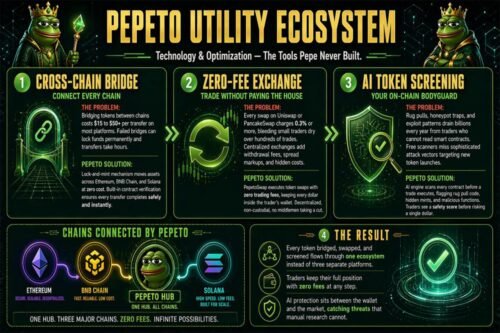
    The cross chain bridge moves assets between blockchains without losing value, while the PepetoAI risk scorer grades risk on every position from open to close so the wallet understands exposure before committing. A trader using this ecosystem can swap tokens at zero fees, bridge value between networks, and score positions for risk inside one system.

    The intelligence layer is fully built, not a roadmap promise, which separates Pepeto from presales that raised money on ideas they never shipped. The founder of the original Pepe wave leads part of the team, and a SolidProof audit backs the code. Raising $10 million at $0.0000001873 with a Binance listing expected is the math that turns speculation into early positioning.

    Dogecoin

    Dogecoin broke below $0.10 on May 28, trading near $0.099 after losing over 15% in two weeks, according to CaptainAltcoin. Support at $0.096 has held for six days, but resistance now sits at the $0.10 level it just lost. Even a bounce to $0.12 only returns 20% from here, a slow recovery compared to the returns a presale to listing entry can generate.

    Avalanche

    Avalanche traded near $9.37 on May 29, well below its $8.846 all time high from 2021, according to Changelly. The token has struggled to escape its range despite continued development, and the return from $9 toward old peaks requires years of growth, a different timeline entirely from the kind of new cryptocurrency presale priced at fractions of a penny where the listing date ahead creates the first real price discovery event.

    Conclusion

    Bitcoin holding above $72,000 showed the market still has a floor, and the $10 million raised by Pepeto proves conviction capital knows a setup even during a drawdown. But recovering from losses and building real wealth are different things, and the wallets that grind back to even on large caps are not the ones who finish richest.

    Every cycle the wallets that ended with the biggest gains held their blue chips AND locked one early position nobody else spotted. Pepeto is the strongest opportunity in the presale space for 2026. The traders who moved first close the cycle with returns the later entries can only watch, and the data on how presales perform after listing speaks for itself while everyone who waited carries the regret.

    Click To Visit Pepeto official Website To Enter The Presale

    FAQs

    What caused record Bitcoin ETF outflows this week?

    US spot Bitcoin ETFs saw $733 million in single day outflows on May 28 after US Iran strikes triggered broad de risking, pushing Bitcoin below $73,000 and liquidating $958 million across the market.

    Is Dogecoin still worth holding after breaking below $0.10?

    Dogecoin lost $0.10 support and faces resistance at the same level, with a recovery depending on broad sentiment rather than a specific catalyst, keeping the return limited compared to earlier stage entries.

    Why is Pepeto considered a strong pick among presale tokens for 2026?

    Pepeto has passed $10 million in presale funding through the Pepeto official website with working tools, a SolidProof audit, and a Binance listing expected, giving this new cryptocurrency verified credibility and the kind of presale to listing returns available on the Pepeto official website that most tokens simply cannot match.

    Disclaimer:
    This article is for informational purposes only and does not constitute financial advice. Cryptocurrency investments carry risk, including total loss of capital.

    All market analysis and token data are for informational purposes only and do not constitute financial advice. Readers should conduct independent research and consult licensed advisors before investing.

    Crypto Press Release Distribution by BTCPressWire.com

  • Crypto Market News: Pepeto Presale Hits $10M as Ethereum Faces an Identity Crisis

    Dragonfly Capital just called Ethereum the Microsoft of crypto, massive, slow, and no longer the first to innovate on anything. That kind of crypto market news from one of the most respected venture firms does not land quietly, especially when the Ethereum Foundation has lost eight senior contributors in 2026, five in May alone.

    While the second largest blockchain deals with an internal reckoning, Pepeto keeps raising presale capital past $10 million. This article covers the Ethereum direction story and what it means for wallets considering Pepeto before the listing.

    Dragonfly Capital Says Vitalik’s Vision Is Bearish for ETH

    Dragonfly Capital Managing Partner Haseeb Qureshi said on the Milk Road podcast that Vitalik Buterin’s recent comments are bearish for ETH because the Foundation refuses to prioritize price, according to Coinpedia. The criticism comes alongside eight senior departures and 11 straight days of net outflows from US spot Ethereum ETFs totaling $506 million, as Yahoo Finance reported. When a top fund and the market’s own capital flows both signal concern, the crypto market news is telling traders to look beyond established names for the returns this cycle can deliver.

    Tokens Worth Watching Amid the Latest Crypto Market News

    Pepeto

    Uncertainty in the biggest ecosystems makes earlier entries more valuable, and Pepeto is a meme coin exchange system designed to give retail traders tools that level the playing field before listing. Wallets buying Pepeto at presale pricing are positioned before the crowd learns the name, and that timing gap is where the real returns live.

    The PepetoAI risk scorer analyzes every trade from entry to exit so the wallet knows the risk before committing, while the zero fee cross chain swap engine moves tokens across any chain without fees. These are working tools, not roadmap promises, which is why $10 million in funding has come from wallets that did their own research. The developer who started Pepe is part of the team, and SolidProof audited the contract.

    Staking at 171% APY turns a $7,000 position into $12,740 in yearly rewards before the exchange opens. The headlines keep pointing to cracks in the biggest projects, and while those cracks grow the window to enter Pepeto keeps shrinking because a Binance listing is expected ahead.

    Ethereum

    Ethereum traded near $2,004 on May 28 before slipping to $1,976 during the Iran selloff, roughly 60% below its August 2025 all time high near $4,954, according to Yahoo Finance. The Foundation crisis and 11 days of ETF outflows totaling $506 million show institutional capital actively leaving. A recovery toward $2,500 requires a reversal in both sentiment and flows that nothing in the current cycle suggests is coming soon.

    BNB

    BNB held near $651 as one of the more stable large caps during the May selloff, supported by ecosystem growth, according to CoinGape. The stability itself is the ceiling, because BNB has traded in a range for months and the gain from $651 toward its highs is a slow climb compared to the kind of presale to listing math that has historically produced the biggest returns in every cycle for wallets that entered early.

    Conclusion

    This week’s crypto market news delivered a clear signal when Dragonfly Capital flagged Ethereum’s direction as bearish and $506 million in ETF outflows confirmed institutional money agrees. Now is the time to find the position that delivers when the bull run arrives, and presales are where the biggest cycle returns are made.

    Every self made crypto millionaire gives the same advice, buy the strongest presale while the established names sort out their problems, because the hours before a major listing are always the difference between life changing money and regret. Pepeto is still at presale pricing on the Pepeto official website, but the speed of this $10 million raise means the window could close without warning, and the weight of finding a presale this early and letting the moment pass is something the wallets that hesitated carry long after listing.

    Click To Visit Pepeto official Website To Enter The Presale

    FAQs

    What is the biggest story in crypto market news affecting Ethereum?

    Dragonfly Capital called Ethereum the Microsoft of crypto, with bearish comments landing alongside eight Foundation departures and $506 million in ETF outflows across 11 trading days.

    Is BNB a safer hold than ETH during the current cycle?

    BNB has been more stable, but range bound trading means the gain from $651 is limited compared to what a presale entry at fractions of a penny can deliver before listing.

    How does Pepeto fit into the current cycle for investors?

    Pepeto has raised $10 million on the Pepeto official website with a Binance listing expected, offering a presale entry while the largest projects face uncertainty, and that gap is the full opportunity.

    Disclaimer:
    This article is for informational purposes only and does not constitute financial advice. Cryptocurrency investments carry risk, including total loss of capital.

    All market analysis and token data are for informational purposes only and do not constitute financial advice. Readers should conduct independent research and consult licensed advisors before investing.

    Crypto Press Release Distribution by BTCPressWire.com

  • Next Crypto to Explode in 2026: Will Chainlink and BlockDAG Beat Pepeto’s Presale Gains?

    Wall Street’s largest clearinghouse just picked a public blockchain for tokenized securities, and the token behind it jumped 924% in trading volume overnight while the rest of the market bled. The move from DTCC to Stellar proved that the next crypto to explode does not always come from hype but from real institutional adoption arriving at speed.

    While established tokens react to headlines, Pepeto has raised $10 million in presale funding. This article covers the strongest entries and whether Chainlink or BlockDAG can keep pace with Pepeto before its Binance listing.

    DTCC Picks Stellar for Tokenized Securities as Volume Spikes 924%

    The Depository Trust and Clearing Corporation announced on May 27 that it will connect its tokenized securities to the Stellar blockchain by the first half of 2027, according to U.Today. XLM rose 20% while volume crossed $934 million, making it the only top 50 crypto in the green during the selloff, as CoinGape reported. DTCC processes over $2.5 quadrillion in securities annually, and the rollout targets Russell 1000 stocks, major ETFs, and US Treasuries.

    When the biggest financial plumbing in America picks a chain, capital follows, but the largest returns always go to wallets that entered before the announcement.

    Best Tokens to Watch as the Next Crypto to Explode in 2026

    Pepeto

    Smart capital is moving fast into Pepeto, because funded wallets see this presale as one of the best setups for returns in 2026, with $10 million raised and the token priced at $0.0000001873. Pepeto is a utility backed meme coin that gives retail traders real exchange tools instead of empty promises, which is why it keeps pulling capital from older presales.

    The zero fee cross chain swap engine handles trades across any chain at zero cost, while the cross chain bridge moves assets between networks so the trader never loses value. The creator who launched Pepe built the wave that meme coin markets still follow, and a SolidProof audit backs the contract, making Pepeto one of the very few presales with verified credibility from the start.

    Staking at 171% APY means a $10,000 position earns $18,200 in yearly rewards before the listing even opens. The token that breaks out biggest will be the one still at presale pricing with a Binance listing expected, not one that already traded sideways for months.

    Chainlink

    Chainlink traded near $9.37 on May 29, sitting 82% below its all time high of $52.99, while the 200 day moving average keeps declining, according to Changelly. Oracle infrastructure remains critical to DeFi, but the path from $9 to $52 depends on the entire sector rotating back to growth, and that grind is a different conversation from a presale where the listing itself creates the first major price event.

    BlockDAG

    BlockDAG markets itself as a Layer 1 using directed acyclic graph technology for faster transactions. The project has run an extended presale through multiple rounds, but its roadmap timelines have shifted and the absence of a confirmed mainnet date raises questions about whether the technology behind the marketing will actually go live for users on schedule, and that uncertainty makes it a risky bet when verified alternatives already exist.

    Conclusion

    Every massive return in crypto started the same way. Solana launched at $0.22 in 2020 and reached $293 at its peak, turning a $1,000 entry into over $1.3 million for the wallets that held. Bitcoin first traded for less than a penny and crossed $126,000 at its 2025 high, making early believers wealthier than most funds.

    The one thing every early buyer had in common is they moved while everyone doubted. Pepeto has $10 million raised, verified tools, and a Binance listing expected, but once the presale closes and exchange trading begins that early entry vanishes and the wallets still watching pay a higher price for the same token the early buyers already own.

    Click To Visit Pepeto official Website To Enter The Presale

    FAQs

    What token is positioned as the next crypto to explode after the DTCC Stellar news?

    The DTCC partnership showed how fast a token moves when institutional adoption arrives, with XLM jumping 20% while the market fell, proving that real utility drives explosive price action.

    Can Chainlink recover from 82% below its all time high?

    LINK’s oracle role gives it long term value, but the path from $9 toward $52 requires a full DeFi rotation that could take years, making the return very different from early entries.

    Is Pepeto a strong pick before exchange listing?

    Pepeto has raised $10 million on the Pepeto official website with working tools and a Binance listing expected, and the full gap between presale entry on the Pepeto official website and exchange listing price is the opportunity for wallets that move now.

    Disclaimer:
    This article is for informational purposes only and does not constitute financial advice. Cryptocurrency investments carry risk, including total loss of capital.

    All market analysis and token data are for informational purposes only and do not constitute financial advice. Readers should conduct independent research and consult licensed advisors before investing.

    Crypto Press Release Distribution by BTCPressWire.com

  • Bitcoin Price Crashes Below $73K as Pepeto Presale Pulls Capital Through the Selloff

    The Bitcoin price dropped below $73,000 this week after US military strikes near the Strait of Hormuz triggered a wave of liquidations that wiped nearly $1 billion in leveraged crypto positions. Traders who positioned for a recovery found themselves on the wrong side as 93% of the liquidated capital came from longs.

    While the Bitcoin price tested multi week lows, Pepeto kept raising capital through its presale, now past $10 million. This article breaks down where Bitcoin sits after the crash and why presale entries matter most when larger coins pull back.

    US Iran Strikes Send Bitcoin Below $73K and Trigger $1 Billion in Liquidations

    Bitcoin fell to $72,622 on May 28 as US Central Command struck an Iranian military site near the Strait of Hormuz, according to CoinDesk. CoinGlass data showed $958 million in total liquidations across 167,706 traders, with Bitcoin leading at $386 million and Ether at $240 million, as CoinCentral reported.

    Analyst Captain Faibik warned that losing $72,000 could trigger a 20 to 25% further drop. The crash exposed every wallet positioned for gains, but it also opened a window where the smartest capital quietly moves into earlier positions.

    Bitcoin Price Outlook and Tokens Drawing Capital in 2026

    Pepeto

    The Bitcoin price crash reminded the market that even the largest crypto can lose 4% in one session when geopolitical risk arrives, and Pepeto is at presale pricing while that fear keeps most traders frozen.

    Pepeto is a meme coin exchange ecosystem built for traders who know that real wealth comes from entering before the listing, not from buying dips on coins that already ran. While the crash pulled $733 million out of Bitcoin spot ETFs in a single day, the Pepeto presale kept filling because wallets at this stage are not reacting to headlines. The cross chain bridge moves assets across blockchains without friction, and the PepetoAI risk scorer grades every trade from entry to exit so the retail wallet stays protected.

    The mind behind the first Pepe token is part of the team, and a SolidProof audit confirms the contract is clean. Over $10 million has been committed by wallets that moved before the crowd, and with a former Binance expert on the team and a Binance listing expected after the presale closes, the setup points to one outcome. No recovery from $74,000 can match the returns from buying at $0.0000001873 before a token touches a public exchange.

    Bitcoin

    Bitcoin traded near $74,000 on May 29 after recovering from its $72,622 low, roughly 42% below its October 2025 all time high of $126,198, according to CoinDesk. Support at $72,000 needs to hold, because a break opens the door to a 20 to 25% further drop. A bounce toward $77,000 requires positive ETF flows within 48 hours of the low, and until that signal appears the price remains vulnerable to another flush driven by geopolitical headlines.

    XRP

    XRP slipped 3.6% to $1.32 during the broader crypto selloff, as BeInCrypto reported. Support at $1.32 held, but even if XRP reclaims $1.40 resistance and pushes toward $1.60, the gain from current levels stays in single digits, a fraction of what a presale to listing entry can produce for wallets willing to commit early.

    Conclusion

    The Bitcoin price crash below $73,000 proved that even the most established crypto is not safe from geopolitical shock, and the $386 million in BTC liquidations showed how many wallets were caught wrong. But the returns that change outcomes in a cycle come from presale entries, not from grinding toward old highs.

    Pepeto carries the kind of traction that early Bitcoin wallets would recognize, because the instinct that drove traders to buy BTC at fractions of a cent in 2010 is exactly the instinct moving capital into this presale at $10 million raised, and those wallets always spot these early setups first. The entry on the Pepeto official website is still at presale pricing, but once the Binance listing opens that window closes permanently.

    Click To Visit Pepeto official Website To Enter The Presale

    FAQs

    What caused the Bitcoin price to drop below $73,000?

    US military strikes near the Strait of Hormuz triggered $958 million in liquidations, with Bitcoin leading at $386 million and 93% of losses coming from long positions.

    What is the Bitcoin price target after the Iran selloff?

    Analysts watch $72,000 as critical support, with a bounce to $77,000 possible if ETF inflows return, while a break below opens a 20 to 25% further correction.

    How does the Bitcoin price recovery compare to Pepeto’s presale entry?

    Bitcoin’s path from $74,000 depends on macro forces no trader controls. Pepeto is at presale pricing on the Pepeto official website with a Binance listing expected, offering a different scale of returns entirely.

    Disclaimer:
    This article is for informational purposes only and does not constitute financial advice. Cryptocurrency investments carry risk, including total loss of capital.

    All market analysis and token data are for informational purposes only and do not constitute financial advice. Readers should conduct independent research and consult licensed advisors before investing.

    Crypto Press Release Distribution by BTCPressWire.com

  • Aave Price Prediction: Pepeto Races Past $10M Raised and Outpaces Even the Most Bullish AAVE Forecast

    The push for a permanent US crypto legal framework grew louder this week when President Trump called for a “future proof” digital asset market structure. Aave sits near multi year lows while the CLARITY Act moves through the Senate, and DeFi is still waiting for the clarity that restarts institutional buying.

    While lawmakers finalize rules that could take months to reach traders, Pepeto has raised $10 million in presale funding. This article connects the Aave price prediction with the case for entering Pepeto before the expected Binance listing.

    Trump Pushes for Permanent Crypto Market Structure

    President Trump called for a “future proof” digital asset framework on Truth Social, framing it as a break from the Gensler era that drove innovation offshore, according to The Block. The Senate Banking Committee advanced the CLARITY Act on May 14 with a 15 to 9 vote, but the bill still needs Democratic support to survive a filibuster, as CoinCentral reported. The direction is clear, but the months between committee votes and signed law leave a window that only early positioned wallets can fill.

    Aave Price Prediction and the Best Crypto to Watch in 2026

    Pepeto

    The CLARITY Act will take months to move from committee votes to signed law, and Pepeto is available at presale pricing right now, which means the gap between regulatory timelines and one presale closing is the entire opportunity. Pepeto is a meme coin exchange ecosystem built for the trader who watches others collect early gains while the cheapest entries close before the crowd catches on.

    As new regulations pull institutional money deeper into crypto, the distance between those who moved first and those still waiting keeps growing, and Pepeto was designed to close that gap with real exchange tools. The zero fee cross chain swap engine lets any wallet move tokens across chains without paying trading fees, while the PepetoAI risk scorer grades every position from entry to exit so the retail trader stays protected.

    The architect of the original Pepe token is behind Pepeto’s development, and a SolidProof audit backs the contract, giving this presale verified credibility that most new tokens never earn. The presale has pulled in $10 million from wallets that recognized the setup early, and that conviction from funded buyers is the clearest signal a presale can send.

    With a former Binance expert on the team and a Binance listing expected after the presale closes, the path from entry to exchange is already being prepared. No Aave price prediction on any chart is set up to deliver the kind of return that buying Pepeto at $0.0000001873 before listing can offer to wallets willing to move today.

    Aave

    Aave traded near $81 on May 29, holding above the $80 support after a correction from its February highs above $110, according to Changelly. The token sits 87% below its all time high of $661, and both the 50 day and 200 day moving averages have been declining since April. A bounce toward $100 is possible if DeFi sentiment improves, but the Aave price prediction ceiling from here means a slow grind rather than the kind of move that changes financial situations.

    Solana

    Solana traded near $82 on May 29 after slipping below $80 support during the US Iran selloff that wiped nearly $1 billion in leveraged positions, as CoinDesk reported. RSI sits at 41, below neutral, and resistance at $87 needs to break before the structure improves. Even a run back to $100 only delivers a 22% gain from current prices, a different world from presale to listing math.

    Conclusion

    The push for permanent crypto regulation is a real signal that digital assets are being written into law, and the Aave price prediction strengthens as clarity draws institutional capital back to DeFi. But recovering from $81 toward old highs is a slow grind, and no recovery trade can match the returns a presale offers before a coin ever touches an exchange.

    Once the Binance listing opens, the presale price disappears and every wallet that arrives after pays more to buy from the wallets that got in at a fraction of a penny. Traders who missed the window will chase a token they could have owned for almost nothing, and the entry on the Pepeto official website is still open, but when it closes that door locks for good.

    Click To Visit Pepeto official Website To Enter The Presale

    FAQs

    What is the Aave price prediction as the CLARITY Act advances through the Senate?

    AAVE’s outlook points to a recovery toward $100 if DeFi sentiment improves, but the token sits 87% below its all time high and the path depends on sustained market strength.

    What is the AAVE price target as bearish indicators show weakness?

    Analysts watch $80 as key support, with a move above $100 needed before the bullish case gains weight, while both major moving averages keep falling.

    How does Aave’s price potential compare to early opportunities like Pepeto?

    Aave’s recovery could take months. Pepeto is at presale pricing on the Pepeto official website with a Binance listing expected, and the full entry to listing gap is the opportunity.

    Disclaimer:
    This article is for informational purposes only and does not constitute financial advice. Cryptocurrency investments carry risk, including total loss of capital.

    All market analysis and token data are for informational purposes only and do not constitute financial advice. Readers should conduct independent research and consult licensed advisors before investing.

    Crypto Press Release Distribution by BTCPressWire.com

  • Best Crypto to Buy in May 2026: 5x to 100x Returns as CME Launches Round the Clock Bitcoin Futures

    The Best Crypto to Buy in May 2026 search produced entries that are still available now in May, and the biggest confirmation that crypto infrastructure is permanent landed this week when CME Group launched 24/7 Bitcoin futures trading on Globex, ending the weekend gap and giving institutions the ability to trade around the clock for the first time.

    When the largest derivatives marketplace in the world gives crypto the same always-on treatment as currency markets, buyers looking for the Best Crypto to Buy in May 2026 and beyond are watching proof that Wall Street is speeding up its commitment with $3 trillion in notional crypto volume processed through CME last year.

    This infrastructure growth benefits the entire market, but the strongest returns sit in projects offering presale entry before an exchange listing, and Pepeto is a meme coin made by the person who cofounded the Pepe token that banked more than $10 Million through the presale while most of the market sat still.

    CME Group Ends the Weekend Gap With 24/7 Bitcoin Futures Launch

    CME launching continuous Bitcoin and Ethereum futures trading starting May 29 is a structural change because the weekend gap that traders watched for years is now gone, and hedge funds and asset managers can finally manage risk on regulated derivatives without waiting two days for markets to reopen after weekend price moves.

    The Best Crypto to Buy in May 2026 question connects directly to this launch because CME reported average daily volumes up 46 percent year over year in 2026, and the move to 24/7 trading came after client demand hit record levels following $3 trillion in notional crypto volume processed through the exchange during 2025.

    The always-on schedule means institutions no longer need offshore platforms for weekend hedging, and that shift pulls regulated capital into crypto permanently because every hedge fund that stopped trading on Friday night can now stay active through Saturday and Sunday on CME.

    Presale Protocols and Established Tokens Competing for the Strongest Returns This Cycle

    Pepeto Protocol Offers Presale Entry Before Expected Binance Listing

    The Best Crypto to Buy in May 2026 list included presale tokens that are still open for entry, and Pepeto offers a cost of $0.0000001873 before the expected Binance listing, which gives wallets a starting point that the open market will never offer again once trading begins and the price moves to wherever demand takes it.

    The person who cofounded the Pepe token made Pepeto as a working protocol where the cross-chain bridge links separate blockchains so holders move tokens freely between networks, and PepetoSwap gives holders a place to swap tokens without paying anything while keeping the full value of every trade inside the wallet.

    Buyers banked more than $10 Million through the presale during a stretch where fear dominated and most retail wallets stopped entering new positions, and every cycle produces winners who entered during fear and collected returns during the recovery.

    Staked tokens generate 171% APY for participants, turning the presale waiting period into active earning time, and the total supply of 420 trillion tokens matches the same setup the original Pepe coin used when it reached $11 billion in value with zero working tools or products behind the name.

    The SolidProof audit cleared every contract, and the Best Crypto to Buy in May 2026 comparison comes down to this: the listing separates the wallets that entered from everyone who reads about returns afterward, and the presale is the only path into the first group.

    XRP Targets Growth Through Cross-Border Payment Adoption

    XRP trades near $1.32 today as Ripple continues winning regulatory battles that let banks use the token for cross-border payments, processing transactions in seconds at costs traditional wire services cannot match.

    XRP targeting higher levels depends on how fast traditional finance adopts Ripple technology across global payment networks, and ongoing regulatory clarity gives XRP a stronger position than most altcoins.

    CHAINLINK Powers Real-World Data Feeds Across DeFi Protocols

    LINK trades near $9 today as Chainlink remains the leading oracle network connecting real-world data to smart contracts across hundreds of decentralized applications, and the protocol processes billions in transaction value that other projects rely on for accurate pricing.

    Chainlink expanded into cross-chain communication with CCIP this year, and the growing number of institutions testing tokenized assets creates demand for reliable data feeds that LINK provides across multiple blockchain networks.

    Conclusion

    The Best Crypto to Buy in May 2026 search led to the same setup that produced every early buyer success story in crypto, because every cycle has a moment when fear pushes prices down and the wallets that enter during that fear are the ones collecting returns when the recovery arrives, and CME launching 24/7 futures this week confirms the recovery infrastructure is already being built.

    The Pepeto presale sits at the center of that pattern right now with more than $10 Million banked from wallets that recognized what a working protocol with PepetoSwap handling fee-free trades, a bridge connecting chains, and the Pepe token cofounder behind it means when the listing opens trading to the world.

    Entering now is how wallets join the group that every cycle creates, and the listing will be the moment that separates the entries from the regrets because the presale price leaves forever once trading starts and no amount of waiting brings it back.

    Click To Visit Pepeto official Website To Enter The Presale

    FAQs

    What was the Best Crypto to Buy in May 2026?

    The Best Crypto to Buy in May 2026 included presale tokens still available in May, and projects like Pepeto with working tools and expected exchange listings carry the strongest short-term return potential.

    Does the CME 24/7 launch affect crypto prices?

    The CME launching round-the-clock Bitcoin futures brings more institutional hedging and trading activity into the market permanently, which increases liquidity and supports price stability during weekend sessions.

    Which tokens offer the strongest return potential right now?

    Pepeto offers presale entry before an expected Binance listing, XRP targets growth through payment adoption, and LINK benefits from growing demand for oracle services across decentralized applications.

    Disclaimer:
    This article is for informational purposes only and does not constitute financial advice. Cryptocurrency investments carry risk, including total loss of capital.

    All market analysis and token data are for informational purposes only and do not constitute financial advice. Readers should conduct independent research and consult licensed advisors before investing.

    Crypto Press Release Distribution by BTCPressWire.com