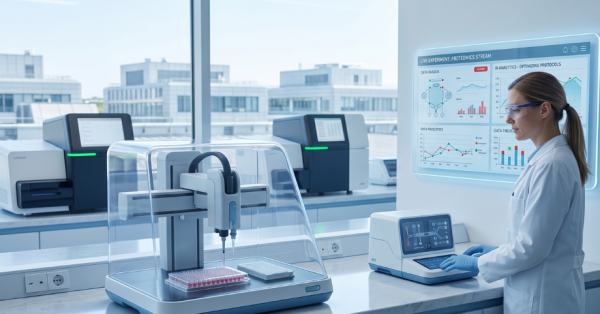
Research and diagnostic laboratories today rely on precision instruments that operate with consistent and repeatable accuracy. Whether they are running high-throughput screening, analyzing biological specimens, or conducting chemical syntheses, researchers depend on equipment that performs reliably every day. However, whenever an instrument fails or loses its calibration, the consequences go beyond minor testing issues. Equipment problems can delay experiments, waste expensive reagents, disrupt research schedules, and affect the reliability of collected data.
As laboratory workloads increase, maintaining equipment performance has become an important part of daily operations. Regular monitoring, timely servicing, and specialist support can help laboratories avoid preventable disruptions and maintain confidence in their results.
Precision Equipment Has Little Room for Error
One important feature of laboratory instruments is that they operate within tight tolerances. Measurements must maintain a high level of accuracy and remain repeatable across different operators, experiments, and time periods. Reliable Microscope services can help maintain optical alignment and ensure consistent instrument performance, reducing the risk of errors during observation and analysis. Even small changes in performance, such as thermal drift, electronic noise, or optical misalignment, can introduce anomalies that affect experimental data.
These issues can be particularly significant when researchers compare results from multiple testing sessions. A measurement that appears slightly different may indicate a genuine scientific finding, but it could also reflect an instrument that is no longer performing as expected. Maintaining consistent equipment conditions helps researchers distinguish meaningful results from technical variation.
Problems Are Not Always Obvious
Equipment failure does not always trigger a complete shutdown. In many cases, instruments display warning signs that should not be overlooked during routine use. Recognizing these changes early can help laboratory teams investigate potential problems before they affect larger research projects.
Common warning signs include:
- Gradual shifts in readings across multiple testing runs.
- Calibration instability that requires more frequent adjustments than usual.
- Sporadic optical distortion, unexpected software warnings, or mechanical friction.
- Non-repeatable control runs that produce inconsistent values.
These irregularities may initially appear minor, particularly when an instrument remains operational. However, continuing to use equipment without investigating the underlying cause can compromise data quality and create additional work. Documenting unusual readings and reporting recurring issues can help technicians identify patterns and determine whether servicing is necessary.
Reliability Becomes More Important as Workloads Grow
As demand for research and diagnostic services increases, laboratory equipment often experiences heavier usage cycles. Instruments may be shared across several teams, departments, and shift rotations, leaving fewer opportunities for routine checks or preventive maintenance.
Higher throughput can also accelerate mechanical wear and increase the likelihood of performance issues. In busy environments, an unavailable instrument does not simply interrupt one experiment. It can create bottlenecks for several projects, force teams to rearrange schedules, and delay the completion of time-sensitive work.
Reliable equipment therefore supports more than accurate measurements. It also helps laboratories manage resources efficiently, maintain predictable workflows, and meet project deadlines. Planning maintenance around operational requirements can reduce the likelihood of unexpected interruptions during critical testing periods.
Maintenance Can Prevent a Small Issue Becoming a Bigger One
One effective way to reduce unscheduled downtime is through proactive servicing. This includes scheduled cleaning, optical alignment, precision calibration, and inspections of mechanical components. Regular checks allow facility managers and technicians to identify minor degradation before it develops into a more serious fault.
Facilities that rely on optical instruments can work with specialist providers offering microscope servicing, inspection, cleaning, and technical alignment. Professional support can help ensure that delicate optics, stage movements, and illumination systems continue to perform accurately under different operating conditions.
Maintenance schedules should also reflect how frequently equipment is used and the demands placed on it. Instruments operating continuously may require closer monitoring than those used occasionally. Keeping service records and documenting recurring problems can further help laboratories make informed decisions about maintenance intervals and equipment replacement.
Specialists Support Matters When Accuracy Is Critical
Complex scientific instruments require technical knowledge that extends beyond general facility maintenance. Specialist technicians have access to diagnostic tools, reference standards, and equipment-specific expertise that can help them evaluate internal tolerances accurately.
These professionals can assess whether an instrument needs optical adjustment, routine recalibration, or targeted component replacement. Their evaluations can also help laboratories address recurring faults rather than repeatedly treating the symptoms. Following appropriate quality assurance procedures is particularly important when research findings or diagnostic results depend on dependable measurements.
Conclusion
Maintaining laboratory reliability requires moving beyond the mindset of fixing equipment only when it breaks. A proactive approach helps protect precision instruments, reduce avoidable downtime, and preserve the integrity of research data.
As laboratory demands continue to grow, consistent maintenance and access to specialist technical support can help facilities keep their equipment dependable. By identifying early warning signs, planning routine servicing, and addressing performance issues promptly, laboratories can maintain smoother operations while supporting accurate and repeatable scientific results.
Leave a Reply
You must be logged in to post a comment.