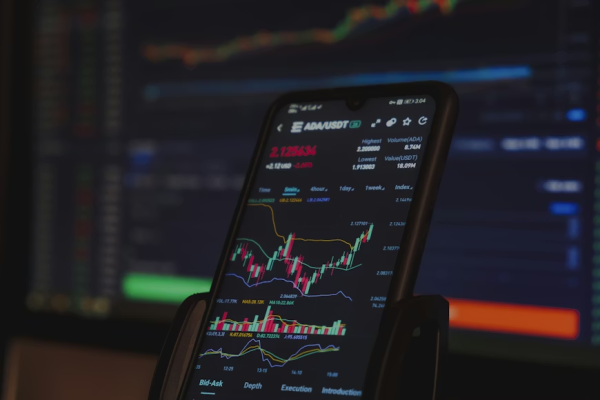
Cardano (ADA) futures trading is a great way to take leveraged bets on the price of ADA without having to own ADA outright.
This guide is a practical walkthrough for trading ADA futures on the OKX crypto exchange. We’ll cover everything from opening an account, funding it, and setting leverage, along with basics on what margin even is and how you can use the risk controls available on the platform.
Key Takeaways
- Futures trading is the process of buying or selling a contract that will transact at a predetermined price at a future date.
- OKX offers ADA derivatives trading in supported regions, with collateral options and leverage limits that vary by contract type, account mode, and jurisdiction.
- To successfully trade ADA futures, you need an account, funding, and a clear trading strategy that will help you mitigate any potential losses.
- Futures trading involves significant risk and isn’t suitable for all investors. Using leverage can amplify both gains and losses.
What Is Futures Trading?
Futures trading means buying or selling a contract that will transact at a predetermined price at either a later date (fixed-date contracts) or with no expiry (perpetual contracts).
In other words, you’re not buying an asset like you would when spot trading, but a contract that tracks that asset’s price.
Futures trading lets you speculate on the price going up, called a long position, or down, called a short position. The fundamental idea is that you profit from being right, while never actually owning the asset. Unlike spot trading, you can also profit from falling markets.
How To Trade ADA Futures, Step-by-Step
Trading ADA futures in itself is relatively simple, although the process might vary slightly depending on the platform you use.
For the purpose of this guide, we’ll demonstrate the process using OKX, a major crypto exchange offering a wide array of trading tools and features.
Step 1: Create an OKX Account and Complete Access Requirements
Creating an OKX account only takes a few short steps:
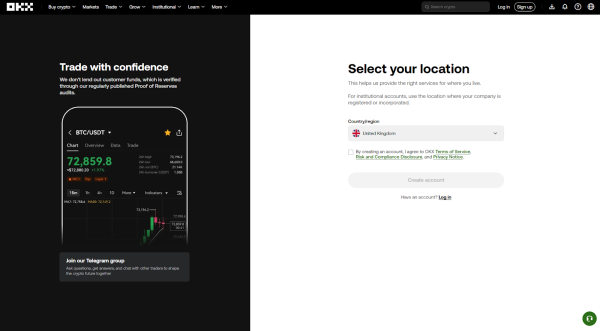
- Select your country: The next steps will depend on the regulatory requirements of your country of residence.
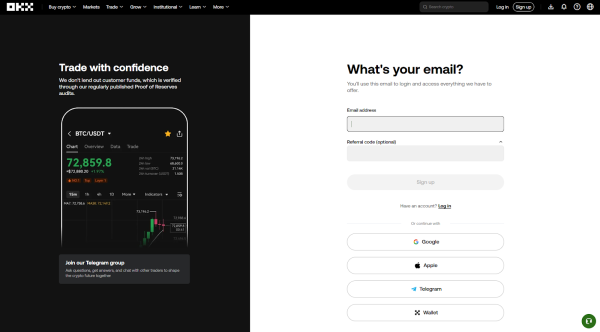
- Enter and confirm your email address: You’ll get a 6-digit code to your address to confirm it’s yours.
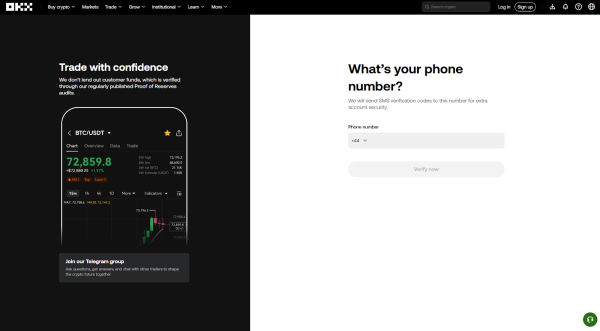
- Enter and confirm your phone number: Again, you’ll get a verification code you need to enter.
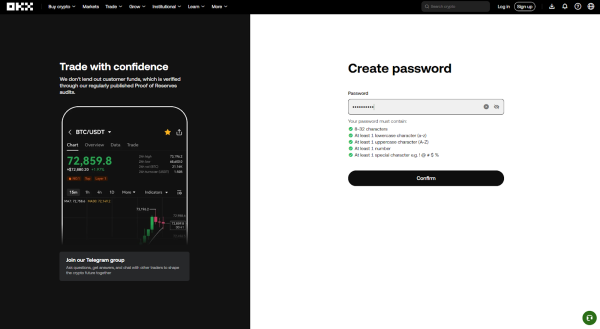
- Set a secure password: Optionally, you can also set a passkey so you don’t have to log in using a password.
- Verify your identity: Confirm your country of residence, provide a valid document from the list you’re offered, then take a selfie. The process should take around 10 minutes total. However, verification times vary depending on your region, document quality, and account review requirements.
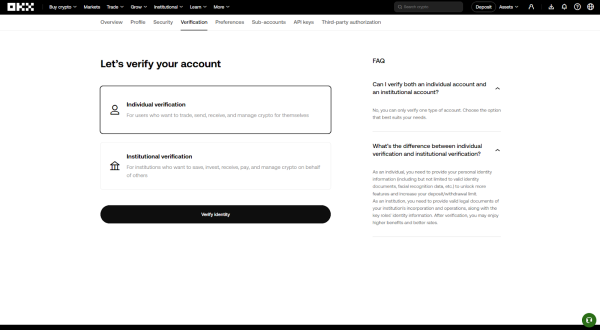
Some of these steps may differ depending on your region.
Step 2: Fund Your Account and Move Margin to Futures
Before you can start trading, you need funds in your account.
Deposit or Buy Crypto, Then Transfer to Futures Wallet
First, you’ll need to buy or deposit crypto. You can use debit and credit cards, Apple Pay, Google Pay, or a bank transfer to get crypto. When depositing, you’ll send your funds from an existing wallet to the address provided by OKX.
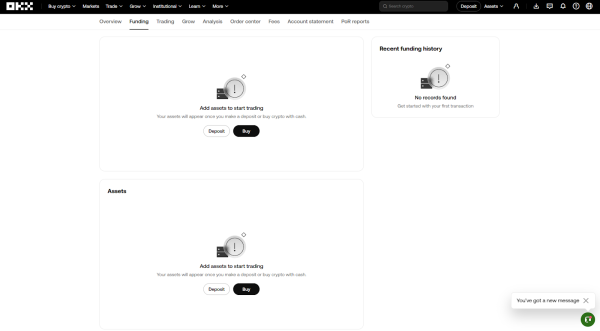
Your funds are available in spot trading mode by default, so you’ll need to switch to futures trading before you can start opening positions. You can also do this from the Futures section, simply by clicking on the Switch mode option at the bottom.
Pick What You Will Use As Margin
There are three main margin types on OKX (although their availability depends on the product and your jurisdiction):
- USDT-margined: Uses USDT as collateral when opening a margin position.
- Crypto-margined: Uses other cryptocurrencies, like BTC or ETH.
- USD-margined: Uses USD as collateral, although availability depends on regional regulations.
Out of these, USDT-margined contracts are the most widely used thanks to the stablecoin’s accessibility.
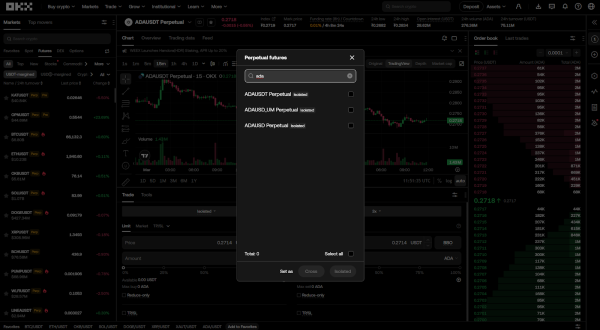
Step 3: Choose the Right ADA Contract
There are two main types of futures contracts based on expiration date: fixed-date (traditional) and perpetual futures.
While traditional contracts expire on the selected date, perpetuals (or perps) do not expire and rely on funding rates to keep their price aligned with the spot market.
Common ADA Perp Markets On OKX
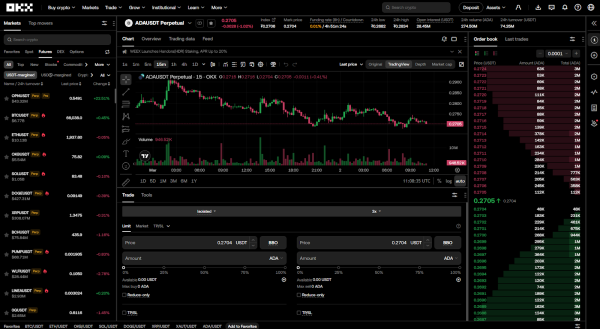
On OKX, ADA perpetual markets typically include two main contract types:
- ADA USDT perps: USDT-margined.
- ADA USD perps: These can be both USD-margined and crypto-margined, where the crypto-margined one uses ADA itself as collateral.
Use Spot Price As Your Reference Point
You can use the ADA/USD price as your baseline to compare it to the perp’s mark price and index price before entering. This means you avoid overpaying or chasing momentum blindly.
If the perp price is higher than the spot price, this means futures are trading at a premium, and if futures are too far from spot, you may be entering an overheated trade.
Leverage trading is the biggest reason for this difference. While spot price is usually the result of real demand, leverage can make futures overshoot temporarily,
Step 4: Set Position Mode, Margin Mode, and Leverage
You can trade futures without using leverage (which effectively sets your leverage at 1x) if you’re looking for lower risk. This makes your contract behave similarly to spot trading, but with futures mechanics.
However, many traders prefer the flexibility of using leverage, so let’s take a look at the possibilities.
Cross vs Isolated Margin
There are two main types of margin:
- Cross margin: Pools your margin across all positions of the same asset, which is riskier if something goes wrong, but maximizes capital use. Moderate risk, used for multiple positions.
- Isolated margin: Keeps your margin to a single position, effectively locking in risk per trade, so liquidation only affects that margin. Conservative risk level, good for beginners and single positions.
Choose Leverage
We’ve mentioned that you can start with 1x leverage, which is actually no leverage at all. Higher leverage means higher risk, and OKX lets you go up to 50x on ADA contracts (or even up to 125x on some other assets).
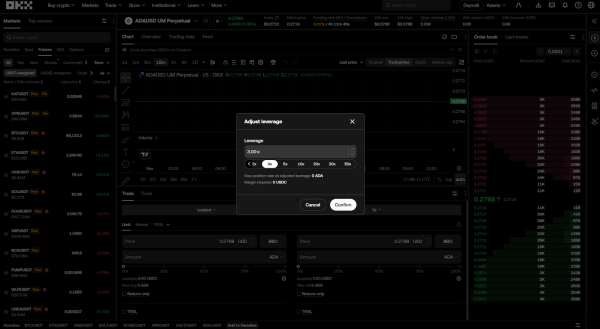
Traders are advised to start low and size their positions via liquidation distance and not conviction. In other words, regardless of your feelings about the trade, make your decisions based on how far your liquidation price is from your invalidation level. Think in risk first and foremost.
Step 5: Pick an Order Type and Place Your Trade
You can choose between market and limit order types.
Market executes immediately at the best available price in the futures order book. This is great for stop-loss execution, when liquidation risk is near, or in news-driven momentum. Risks include amplified slippage and leverage affecting liquidation distance.
A limit order, on the other hand, lets you set the price that you’re willing to trade at. If it’s not instantly matched, it adds liquidity to the order book. It’s good for larger position entries, entering pullbacks, and buying support or selling resistance, among other things. However, there’s a risk of the limit order not being filled or it making you miss strong breakouts.
Set Stop Losses
Stop losses are a core risk management tool and should typically be set immediately after opening a position. A stop loss automatically closes your position when price reaches a predefined level. It protects you from liquidation, catastrophic spikes, and even your own emotional decision-making.
You should place your stop before liquidation and never widen it out of fear. Although small losses can be considered a business expense, you still shouldn’t risk too much per trade.
Final Thoughts
Trading ADA futures is simple when you understand the way futures work, and are aware of the associated risks. That means understanding what can go wrong and how you can protect yourself from it before it’s too late.
The best practice is to always have a clearly predefined strategy before opening any leveraged position, including when and how to exit. The old investing adage still holds true here: never risk more than you can afford to lose.
Disclaimer:
This content is for informational and educational purposes only and does not constitute financial, investment, or trading advice. Cryptocurrency trading, including futures and leveraged products, involves significant risk and may not be suitable for all investors. Prices are highly volatile, and the use of leverage can amplify both gains and losses. Readers should conduct their own research and consult a licensed financial advisor before making any trading decisions. The mention of specific platforms or tools does not constitute an endorsement or recommendation
Leave a Reply
You must be logged in to post a comment.